Accelerated TMS therapy is a fast-acting, non-invasive brain stimulation treatment that condenses weeks of major depressive disorder care into just five to ten daily sessions. By delivering multiple daily magnetic pulse sequences, this approach offers rapid clinical By delivering multiple daily magnetic pulse sequences, this approach offers rapid clinical relief for individuals seeking accelerated TMS therapy without requiring months of daily travel.
Key Takeaways
- Accelerated TMS can shorten treatment to about 5 days.
- TMS protocols vary in targeting, timing, and evidence.
- Check evidence, credentials, safety, coverage, cost, and follow-up.
What Is Accelerated Transcranial Magnetic Stimulation and How Does It Work?
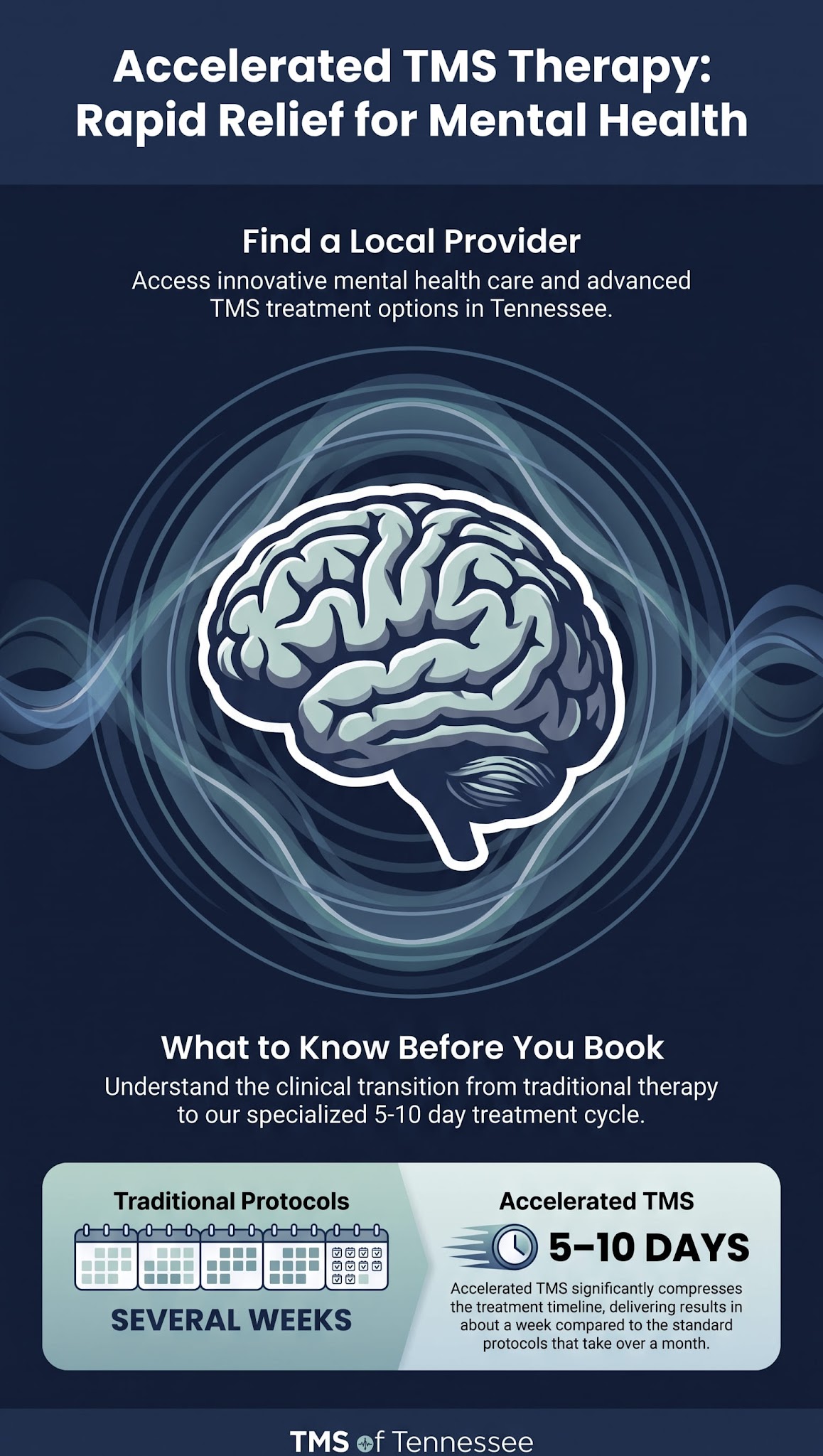
Accelerated transcranial magnetic stimulation delivers targeted magnetic pulses to specific regions of the brain responsible for mood regulation, primarily the dorsolateral prefrontal cortex. Standard transcranial magnetic stimulation requires a patient to visit a clinic once a day, five days a week, for six to eight weeks. In contrast, accelerated protocols compress that exact volume of therapeutic stimulation into multiple daily visits over five to seven consecutive days.
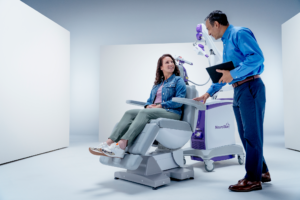
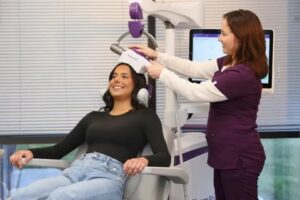
During a typical session, an electromagnetic coil sits gently against your scalp. The device sends focused magnetic pulses that stimulate underactive neurons, encouraging neuroplasticity and strengthening pathways that regulate mood. Because accelerated treatment delivers several sessions in a single day, the brain receives frequent stimulation signals, which accelerates the therapeutic response.
Research from PubMed shows:
“The currently available evidence from two open-label self-controlled studies indicates that adjunctive aTMS is a safe and effective therapy for older patients with depression.” – PubMed
Clinical teams structure these daily schedules with precise rest intervals between pulse cycles, giving your brain time to consolidate the stimulation while ensuring comfortable treatment.
How Does an Accelerated TMS Treatment Course Differ From Standard Care?
When you compare accelerated TMS treatment with standard protocols, the primary difference lies in scheduling intensity rather than the underlying physics of magnetic stimulation. Both methods aim to relieve major depression without surgery or systemic medication side effects, but their timelines appeal to very different lifestyle needs.
| Feature | Standard TMS Therapy | Accelerated TMS Therapy |
| Treatment Duration | 6-8 weeks | 5-10 days |
| Daily Frequency | 1 session per day | 3-10 sessions per day |
| Rest Intervals | 24 hours between sessions | 15-50 minutes between sessions |
| Total Time Commitment | 30-45 minutes daily | 4-8 hours daily |
| Time to Notice Relief | Typically 3-4 weeks | Often within 5-7 days |
Standard care fits well for patients who live close to a medical office and can set aside 30 minutes every afternoon for two months. However, if you travel long distances, work full time, or experience severe depressive fatigue, a condensed five-day timeline reduces travel stress and minimizes work disruption.
Who Qualifies for Fast-Acting TMS Therapy?
Adults who have not achieved satisfactory improvement from standard antidepressant medications or traditional therapy are primary candidates for fast-acting TMS therapy. Before beginning treatment, a psychiatrist conducts a comprehensive medical assessment to verify your diagnosis and evaluate your health history.
Candidates must pass a thorough safety screening before clearance. You might qualify for accelerated care if you meet the following clinical criteria:
- You have a confirmed diagnosis of major depressive disorder or treatment-resistant depression.
- You have tried at least two antidepressant medications without adequate symptom relief or experienced intolerable side effects.
- You do not have implanted metallic devices, conductive metal, or permanent electronic implants in or near your head (excluding dental fillings).
- You have no clinical history of primary seizure disorders or unmanaged medical conditions that lower your seizure threshold.
For individuals managing complex conditions, specialized clinics adjust magnetic pulse delivery based on co-occurring mental health diagnoses. For example, clinicians evaluating severe stress responses often explore targeted PTSD treatment options to see how neuromodulation adapts to trauma-related illness.
Is Accelerated Transcranial Magnetic Stimulation Safe and What Are the Side Effects?
Accelerated transcranial magnetic stimulation exhibits a strong safety profile comparable to traditional daily treatments when provided under direct psychiatric supervision. Clinical trials demonstrate that grouping sessions into a single day does not increase the risk of severe adverse events, such as seizures, among properly screened patients.
As noted by Mayo Clinic:
“In research done in conjunction with Mayo Clinic, people with major depression who underwent five rTMS sessions a week for 4 to 6 weeks reported fewer depressive symptoms than study participants who were given a placebo treatment. About twice as many people who received TMS went into remission compared to people who were given placebo treatments.” – Mayo Clinic
Common Daily Side Effects
Most side effects remain mild to moderate and subside shortly after a session ends. Because you receive multiple sessions in one afternoon, side effects accumulate slightly toward the end of the day:
- Mild Scalp Discomfort: The magnetic coil creates a tapping sensation on the head, which can cause temporary scalp tenderness.
- Tension Headaches: Mild headaches sometimes occur during early treatment days but respond well to over-the-counter pain relievers.
- Facial Muscle Twitching: Gentle muscle contractions near the eye or jaw may happen while the coil pulses.
- Treatment Fatigue: Resting between multiple daily sessions can leave you feeling physically tired by session four or five.
Your treatment coordinator continuously monitors your comfort during every session. If you experience scalp sensitivity, the technician can adjust coil placement or lower pulse intensity to ensure you complete your daily schedule comfortably.
What Should You Expect During a Typical Daily Treatment Schedule?
A typical day during an accelerated course requires several hours at the medical facility. Although each individual stimulation block lasts between 3 and 10 minutes, mandatory rest breaks stretch your total daily commitment across half a day.
The Medical Evaluation Process
Your treatment week starts with an initial psychiatric consultation and brain mapping session. The psychiatrist identifies your motor threshold, which determines the exact magnetic energy needed to stimulate your brain safely and effectively.
Evaluation checklist:
- Thorough review of your psychiatric history and past drug trials.
- Physical safety screening for metallic implants or health risks.
- Precise motor threshold mapping and coil localization.
- Custom scheduling for daily session rounds and rest breaks.
- Review of financial estimates and insurance verification.
Your Daily Intake Timeline
- Morning Check-In: You arrive at the clinic, complete a brief mood check, and sit in a comfortable treatment chair.
- Stimulation Round: The technician positions the coil and runs a short stimulation protocol.
- Structured Break: You spend 15 to 50 minutes relaxing, reading, or drinking water in a private quiet room.
- Repeat Rounds: You complete three to ten rounds throughout the day, depending on your custom prescription.
- Daily Discharge: The clinical team checks your vital signs, reviews side effects, and releases you home for rest.
How Much Does Accelerated TMS Cost and Does Insurance Cover It?
The overall cost for an accelerated course depends on your location, the exact pulse protocol, and your specific health insurance provider. Because billing policies vary across regional insurers, you should always obtain a detailed written cost breakdown before starting treatment.
Key Insurance Factors to Verify
- FDA Status: The FDA has granted clearance to specific accelerated theta-burst devices for major depressive disorder. Because clearances rely on explicit machine parameters, confirm that your provider uses an FDA cleared protocol that aligns with insurance coverage guidelines.
- Prior Authorization: Most commercial policies require prior authorization to establish medical necessity before they cover brain stimulation.
- Out-of-Pocket Requirements: Annual deductibles, copayments, and coinsurance apply to your total bill until you meet your policy maximums.
| Cost Item | What to Confirm |
| Initial Evaluation | Is the psychiatric or clinical assessment billed separately? |
| Treatment Sessions | How is the accelerated treatment course priced? |
| Insurance | Does your insurance plan cover the proposed protocol? |
| Authorization | Is prior authorization required before treatment? |
| Deductible and Copays | How much will you pay after insurance coverage? |
| Follow-Up Care | Are follow-up or maintenance sessions included or billed separately? |
| Total Out-of-Pocket Cost | What is the estimated amount you will pay from start to finish? |
Patient support articles published by the National Alliance on Mental Illness note that accelerated care can carry higher upfront costs if an insurer only approves standard once-daily billing codes. Call your clinic’s billing department directly so they can contact your insurance carrier and verify your benefits.
How Prior Authorization Works for Accelerated TMS Coverage?
Securing insurance coverage for transcranial magnetic stimulation requires working closely with your clinic’s financial navigation team before starting care. Most health insurance companies require a formal prior authorization process to verify medical necessity for brain stimulation therapies.
During this review, your insurance provider evaluates your psychiatric treatment history to confirm you meet their clinical criteria. Insurance carriers typically look for documentation showing that you have tried two or more antidepressant medications from different drug classes without adequate symptom improvement, or that you experienced unmanageable medication side effects. Your clinic submits your medical records, past medication trials, and formal psychiatric evaluation to support your request. Having a complete medical history ready during your initial consultation helps streamline approval timelines and reduces unexpected out-of-pocket expenses.
How Do I Locate an Accelerated TMS Provider?
Finding a specialized medical center requires searching beyond general mental health directories. When looking for clinics offering fast-acting neuromodulation, combine terms like “accelerated theta burst” or “SAINT protocol” with your city name.
If you are evaluating regional clinic locations in Middle Tennessee, you can review specialized medical services through local centers like TMS therapy in Brentwood, TN to compare traditional and condensed schedules.
When reviewing patient reviews on forums like Reddit, YouTube, or Mayo Clinic Connect, remember that online patient testimonials reflect personal perspectives rather than guaranteed clinical results. Always weigh user reviews against published peer-reviewed studies and verifiable physician credentials.
How to Evaluate Potential Clinics?
- Verify that a board-certified psychiatrist oversees all daily medical care.
- Confirm that the clinic uses FDA cleared brain stimulation equipment.
- Ensure the staff maintains emergency medical protocols and continuous monitoring.
- Request a clear, itemized financial estimate prior to your first mapping session.
When evaluating your clinical options, reviewing a provider’s full range of services through an accelerated TMS overview helps you prepare for daily timelines, while reading about how insurance covers TMS therapy prepares you for administrative intake requirements.
If severe depression causes thoughts of self-harm or suicide, please call or text 988 immediately to reach the Suicide and Crisis Lifeline. Reach out to a qualified clinic team today to schedule your comprehensive medical evaluation for accelerated TMS therapy and take the first step toward lasting mental wellness.
Getting Started With Your Treatment Plan
Accelerated TMS therapy offers a practical alternative for people who need relief without committing to two full months of weekday clinic visits. When you evaluate potential providers, confirm the exact pulse protocol, safety measures, provider credentials, and total out-of-pocket pricing.
You can read our accelerated TMS overview to study daily timelines, or explore how insurance covers TMS therapy to prepare for intake costs. If severe depression brings thoughts of self-harm or suicide, please call or text 988 immediately to connect with the Suicide and Crisis Lifeline. Reach out to TMS of Tennessee today to schedule your comprehensive evaluation.
Frequently Asked Questions
How long do the results of accelerated TMS last?
Most patients maintain symptom reduction for 6 to 12 months or longer after completing a course. Periodic maintenance or booster sessions may be recommended if depressive symptoms gradually return over time.
How much does accelerated TMS therapy near me cost?
The total cost of accelerated TMS generally ranges between $6,000 and $12,000 without insurance coverage. Exact pricing depends on the specific protocol used, the total number of sessions administered, and your individual insurance benefits.
Can I drive myself home after an accelerated TMS session?
Yes, you can drive yourself to and from the clinic each day. Because TMS is non-invasive and requires no anesthesia or sedation, it does not cause cognitive impairment or motor disruption.
What is the main difference between rTMS and accelerated TMS?
Standard rTMS delivers one treatment session per day over 4 to 6 weeks. Accelerated TMS compresses multiple stimulation sessions into a single day, allowing candidates to finish a full treatment series in as few as 5 to 10 days.
What side effects should I expect during a multi-session day?
Mild scalp soreness and temporary fatigue are the most common side effects during accelerated care. Because you receive multiple rounds of stimulation in a single afternoon, mild fatigue may feel more noticeable by your final daily session.
References
- https://mcpress.mayoclinic.org/mental-health/depression-migraine-and-addiction-can-magnetic-brain-stimulation-help/
- https://pubmed.ncbi.nlm.nih.gov/36353689/#1