Accelerated TMS is not universally better than regular TMS, as clinical evidence shows both approaches achieve comparable overall response and remission rates. The main difference lies in the schedule, allowing accelerated protocols to complete treatment in days rather than weeks for eligible patients.
Research from Stanford University has increased interest in accelerated TMS. However, faster treatment does not consistently produce better long-term outcomes for every patient.
At TMS of Tennessee, treatment decisions are guided by evidence rather than convenience alone. Read on to see how both approaches compare, and what actually matters when choosing between them.
Key Takeaways
- Current evidence suggests accelerated TMS is non-inferior to standard TMS, not consistently better. Outcomes are comparable. The real advantage is faster completion.
- The biggest clinical benefit of accelerated TMS is finishing treatment within days. That matters most for patients with urgent needs or tight scheduling constraints.
- Standard NeuroStar® Advanced TMS remains one of the most established FDA-cleared options. It is indicated for major depressive disorder, OCD, and anxious depression in appropriately selected patients.
Is Accelerated TMS Different From Regular TMS?
Yes. The main difference is the treatment schedule. Both approaches stimulate the same brain regions using magnetic pulses. The primary difference is how the treatment sessions are scheduled. For a closer look at how condensed treatment schedules work, see what is accelerated TMS.
With standard TMS, most people come in for one treatment each weekday. Treatment usually lasts four to seven weeks. Accelerated TMS follows a different schedule. Patients receive several treatment sessions each day over approximately five to ten days.
Stanford University helped popularize accelerated TMS through intensive research, while standard protocols continue to offer established FDA-cleared treatment schedules supported by extensive real-world evidence.
Clinical evaluations published in the National Institutes of Health highlight the core clinical rationale:
“Accelerated repetitive transcranial magnetic stimulation delivers multiple daily stimulation sessions over a compressed timeframe, achieving therapeutic daily dosage rapidly while maintaining comparable antidepressant response rates to standard multi-week protocols.” – National Institutes of Health (2022)
The treatment goal stays the same regardless of the timeline. Both approaches deliver non-invasive brain stimulation to the left dorsolateral prefrontal cortex (left DLPFC) to treat eligible patients with treatment-resistant depression.
| Standard TMS | Accelerated TMS |
| One treatment session daily | Multiple sessions daily |
| Typically 4–7 weeks | Approximately 5–10 days |
| Around 20–36 treatments | Similar overall treatment dose |
| Most established outpatient schedule | Condensed treatment schedule |
The scheduling differences influence several operational factors:
- Shorter overall treatment timeline
- Greater daily time commitment
- Similar cumulative treatment exposure
- Different appointment logistics
Many people assume accelerated TMS uses stronger stimulation. That is not how most protocols work. Instead, they deliver a similar overall treatment dose over fewer days.
Does accelerated TMS use different technology?
Many accelerated programs use intermittent theta burst stimulation (iTBS). These sessions are shorter. That makes multiple treatments in one day more practical.
Some academic centers also study SAINT-inspired protocols. These approaches use individualized cortical targeting. They also use image-guided neuronavigation and carefully timed intervals between sessions. These research protocols vary between treatment centers. They are not the same everywhere.
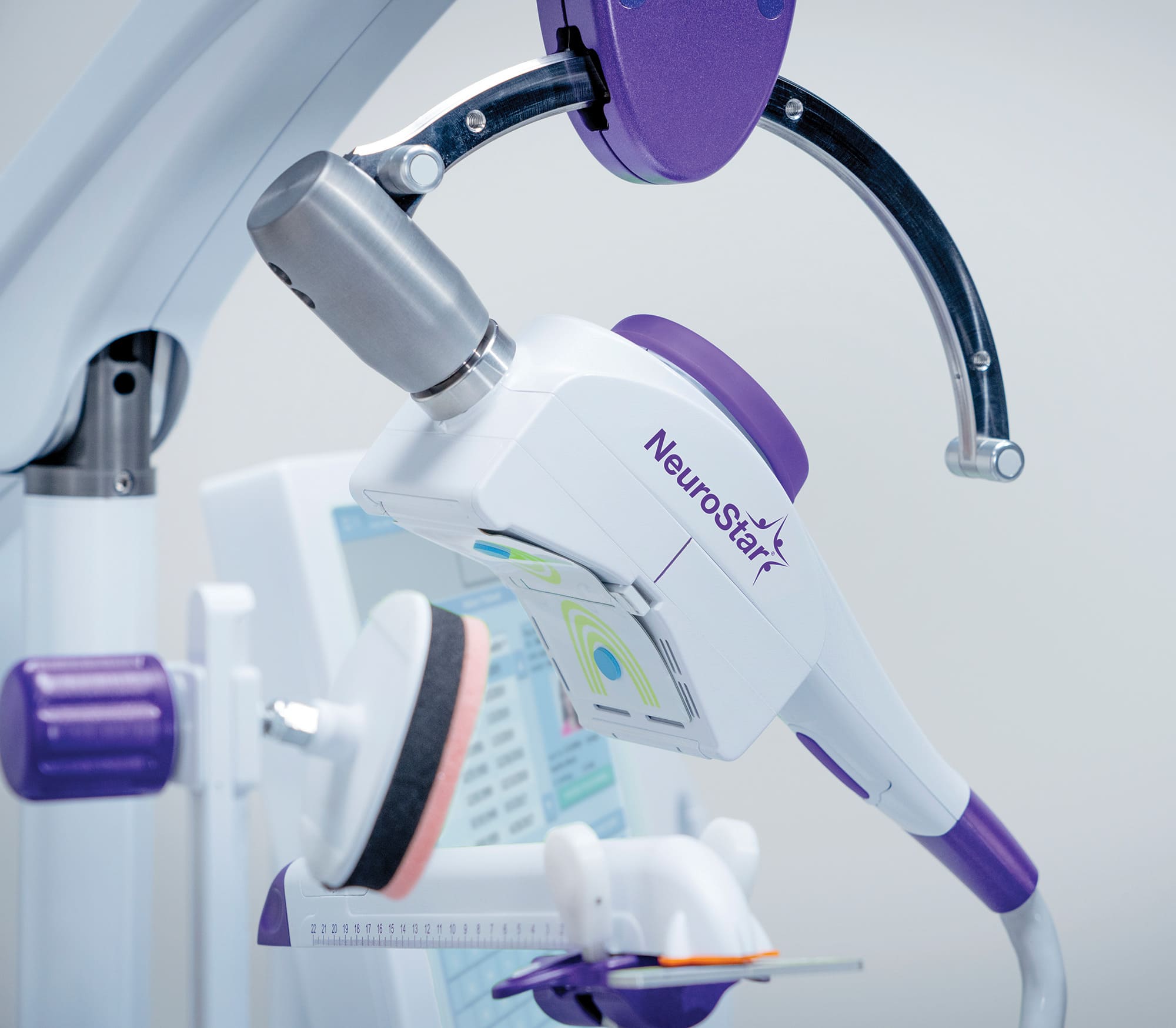
By comparison, NeuroStar Advanced TMS, offered at TMS of Tennessee, delivers FDA-cleared treatment for major depressive disorder (MDD), obsessive-compulsive disorder (OCD), and anxious depression using established clinical protocols.
NeuroStar is not FDA-cleared for every psychiatric condition. It is also not intended as first-line therapy for people whose symptoms respond well to medication alone.
Is Accelerated TMS Better Than Regular TMS for Depression?
Current research suggests accelerated TMS performs about as well as standard repetitive TMS. Some people may notice improvement sooner, while overall response and remission rates appear similar to findings discussed in standard vs. accelerated TMS.
Researchers have evaluated accelerated TMS in randomized trials, systematic reviews, and meta-analyses involving treatment-resistant depression (TRD). While early symptom improvement is frequently observed, extensive clinical data indicate that accelerated TMS is non-inferior rather than vastly superior to standard treatment in overall efficacy.
Although condensed protocols consistently demonstrate encouraging response and remission rates, larger multisite randomized trials are ongoing to evaluate long-term outcomes across diverse patient populations.
| Outcome | Standard TMS | Accelerated TMS |
| Clinical response | Approximately 50% | Similar overall |
| Remission | More than 30% | Similar overall |
| Early symptom improvement | Weeks | Often earlier |
| Long-term durability | Well established | Appears comparable |
Current evidence shows several consistent findings:
- Early symptom improvement may occur sooner.
- Overall remission rates appear comparable.
- Long-term outcomes remain similar in many studies.
- Patient selection continues influencing results.
These findings explain why psychiatrists rarely describe accelerated TMS as universally better. It offers another treatment schedule rather than a replacement for standard TMS.
Why do some studies report dramatic remission rates?
Early SAINT TMS studies attracted a great deal of attention. Some reported unusually high remission rates.
Those studies used highly individualized treatment methods. Researchers selected personalized brain targets. They also treated patients in carefully controlled research settings. Everyday clinical practice often differs from those conditions.
Larger randomized trials have produced encouraging results. However, the findings have generally been less dramatic. Many depression specialists now view accelerated TMS as another scheduling option rather than a replacement for standard NeuroStar treatment.
The early research is encouraging. Larger studies are still underway. That is why psychiatrists avoid promising that one approach works better for everyone.
Why Do Some People Feel Better Faster?
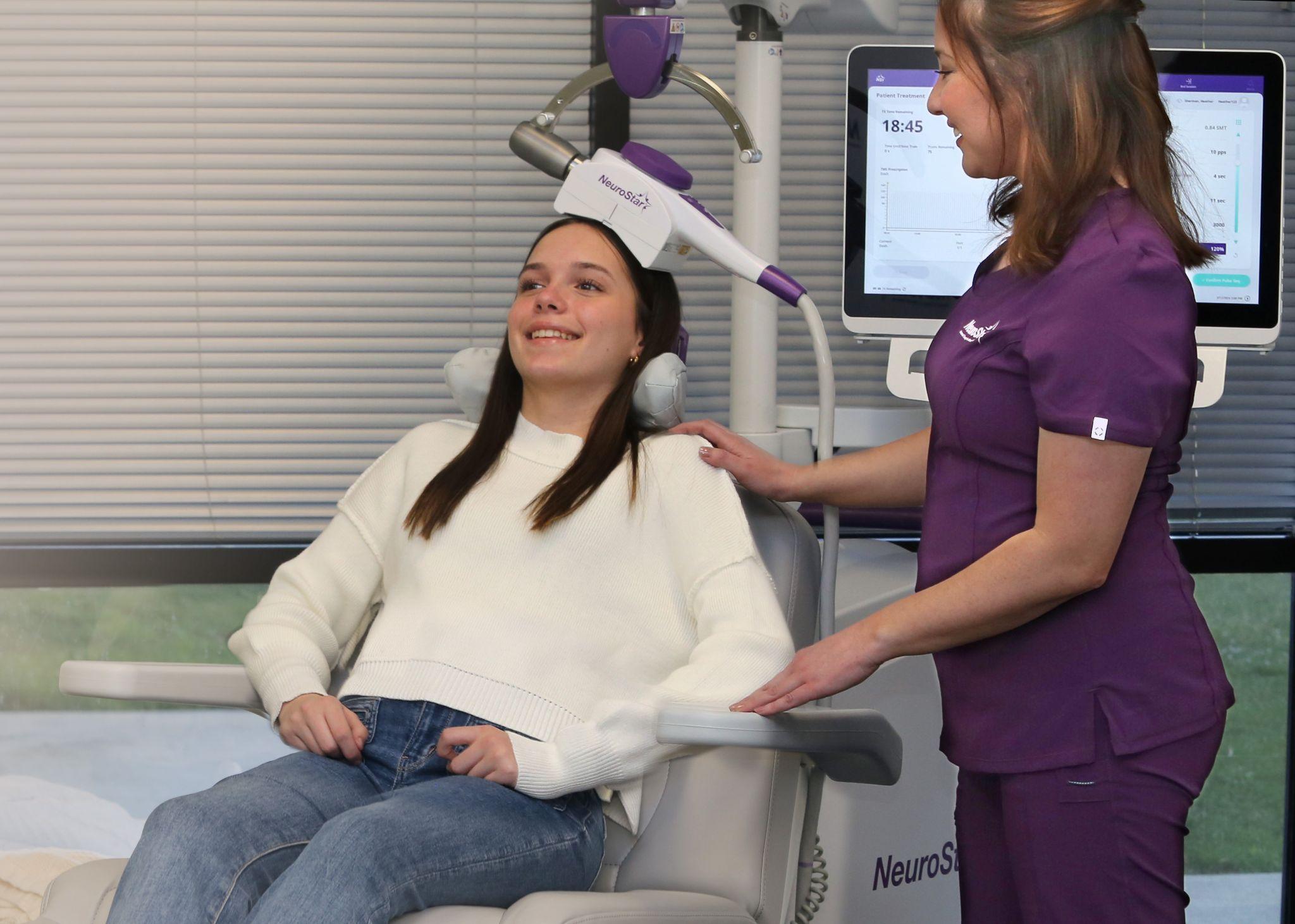
Some people improve sooner because they complete treatment over several days instead of several weeks. The overall treatment exposure stays similar. The schedule changes.
Researchers believe repeated stimulation over a shorter timeframe may strengthen neuroplastic changes more quickly, although the exact mechanism remains under investigation.
One leading neuroplasticity theory suggests that repeated stimulation over shorter inter-session intervals strengthens synaptic pathways before longer breaks occur.
However, recovery timelines naturally vary from patient to patient. While some individuals notice noticeable mood improvements during their actual treatment week, others experience a delayed clinical response and continue to show progress in the weeks following treatment completion.
Several patterns frequently appear:
- Improvement within several days
- Gradual improvement after treatment completion
- Delayed clinical response several weeks later
- Variable remission timelines among patients
- Feeling better sooner does not always mean better long-term results.
Does faster improvement mean better long-term results?
Not necessarily. One randomized comparison reported a median response at about 11 days with accelerated treatment.
Conventional schedules reached a median response at approximately 16 days. Even with earlier improvement, long-term response appeared broadly comparable after extended follow-up.
Earlier improvement can make treatment feel more manageable for some people. Even so, psychiatrists also focus on lasting remission, better daily functioning, and long-term quality of life.
Who Is a Good Candidate for Accelerated TMS?

Accelerated TMS may be appropriate for carefully selected patients. It can be especially helpful when a traditional six-week schedule is difficult to manage. Eligibility still depends on a full psychiatric evaluation.
Your psychiatrist will review your diagnosis first. They will also consider your treatment history, medical history, and any safety concerns. That evaluation determines whether accelerated TMS Therapy or a conventional treatment schedule is the most appropriate option for your individual needs.
Potential candidates may include:
- Individuals balancing demanding professional responsibilities
- Patients traveling long distances for care
- Caregivers with limited scheduling flexibility
- Patients requiring condensed treatment timelines
Selected individuals who previously completed standard TMS without adequate improvement
NeuroStar Advanced TMS is not appropriate for everyone. People with certain non-removable conductive metal near the head, cochlear implants, deep brain stimulators, or other contraindicated implanted devices cannot receive treatment. NeuroStar is also not intended as first-line therapy for mild depression that responds appropriately to medication.
What Are the Advantages of Accelerated TMS?
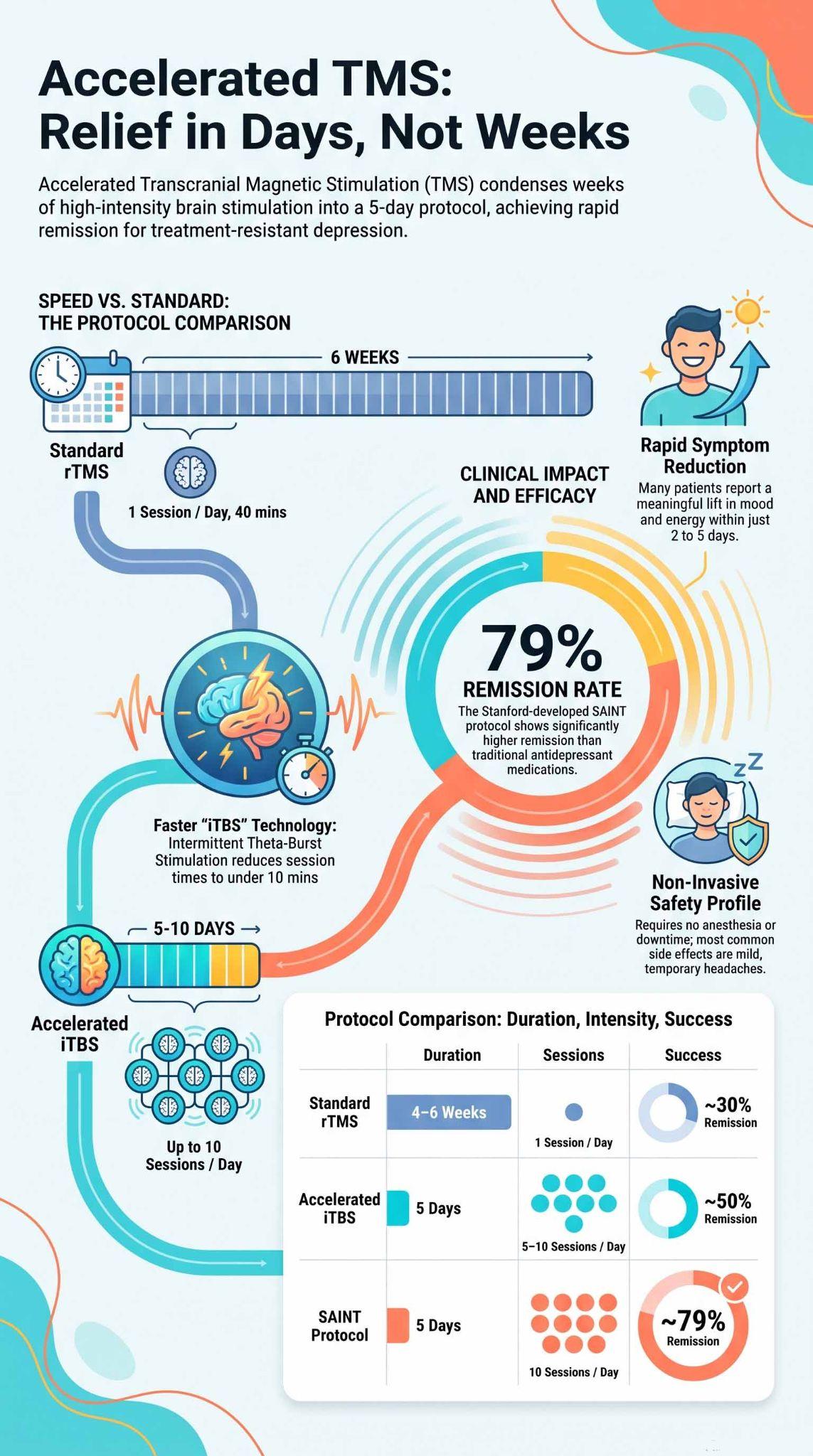
The biggest advantage of accelerated TMS is time. It delivers the treatment over several days instead of several weeks. For carefully selected patients, current evidence suggests clinical outcomes remain comparable to standard treatment schedules.
Many people find it difficult to attend weekday appointments continuously for four to seven weeks. This long duration often becomes a significant barrier to care. Shorter treatment schedules help remove this obstacle by making therapy accessible to patients who cannot commit to extended outpatient commitments due to travel or work constraints.
Completing treatment within one week may reduce time away from work, travel, and caregiving responsibilities
It can reduce time away from work, family responsibilities, and travel. Convenience alone should never determine treatment, but it may help eligible patients complete the full course of therapy.
Researchers have also reported earlier symptom improvement in some accelerated TMS studies. Earlier improvement does not always lead to better long-term remission. Still, it may offer meaningful benefits for carefully selected people with treatment-resistant depression.
Potential advantages include:
- Completion of treatment in approximately one week
- Reduced disruption to employment and family responsibilities
- Fewer weeks of commuting to appointments
- Potential for earlier symptom improvement
- Improved treatment adherence for selected patients
Every treatment plan should remain individualized. A shorter schedule should support careful psychiatric evaluation and evidence-based treatment selection, not replace it.
What Are the Downsides of Accelerated TMS?
Accelerated TMS offers scheduling advantages, but it also presents practical and financial limitations. Insurance coverage, clinic availability, and the evolving research all influence whether this approach is the right fit.
Although accelerated protocols continue attracting scientific interest, they are not available at every outpatient clinic. Many practices continue offering conventional NeuroStar Advanced TMS. This FDA-cleared treatment has extensive real-world clinical experience for major depressive disorder (MDD), obsessive-compulsive disorder (OCD), and anxious depression.
Insurance coverage also varies. Many commercial insurers and government payers already have established coverage pathways for standard TMS after documented medication failures. Accelerated protocols may require additional review or may not receive the same level of reimbursement.
| Consideration | Clinical Importance |
| Insurance coverage | Policies differ among payers |
| Clinic availability | Not every practice offers accelerated schedules |
| Out-of-pocket cost | May be higher in some situations |
| Clinical evidence | Continues expanding through ongoing trials |
Patients should also recognize several practical considerations:
- Multiple appointments each day require longer daily clinic visits.
- Accelerated protocols may not be appropriate for every diagnosis.
- Some protocols remain primarily available through specialized centers.
- Long-term comparative evidence continues developing.
Before starting treatment, discuss financial considerations alongside your psychiatrist’s clinical recommendations. Both factors matter when choosing the most appropriate treatment plan.
Is accelerated TMS always worth the additional cost?
Not necessarily.For many people, conventional NeuroStar Advanced TMS remains an excellent evidence-based treatment. It has broad insurance coverage and many years of clinical experience supporting its use.
Accelerated TMS may offer meaningful scheduling advantages. Those benefits should be weighed alongside insurance coverage, travel demands, and your physician’s recommendation.
Are Side Effects Different Between Accelerated and Standard TMS?
Current evidence confirms that accelerated and standard TMS share virtually identical safety profiles when administered following established clinical guidelines.
As noted in clinical research published by the American Journal of Psychiatry
“Accelerated TMS protocols demonstrate high tolerability and a safety profile comparable to standard daily protocols, with transient localized scalp discomfort and mild headaches remaining the primary reported adverse effects.” – American Journal of Psychiatry (2021).
Serious adverse events remain extremely rare across both modalities when clinicians conduct thorough pre-treatment screenings and maintain proper inter-session spacing.
Common temporary side effects include:
- Mild headache
- Temporary scalp discomfort
- Facial muscle twitching during stimulation
- Mild fatigue after treatment
Most people return to their normal daily activities immediately after treatment. FDA-cleared TMS does not require anesthesia or sedation.
Does receiving multiple sessions each day increase risk?
Current research suggests that well-designed accelerated protocols remain generally well tolerated.
Clinicians carefully plan the timing between sessions. They also monitor stimulation settings and patient response throughout treatment. People with seizure disorders, certain neurological conditions, or contraindicated implanted metallic devices require careful evaluation because TMS may not be appropriate in those situations.
What Are Patients Saying About Accelerated TMS?

Individual responses to accelerated TMS vary because depression severity, treatment history, and brain biology differ from person to person. That is not surprising because depression affects each person differently.
Some patients notice mood improvement during the treatment week. Others improve more gradually after treatment ends. Researchers continue to emphasize that personal experiences should complement, not replace, evidence from randomized controlled trials.
Positive experiences commonly include:
- Earlier mood improvement
- Increased motivation
- Better concentration
- Improved treatment convenience
- Reduced disruption to work schedules
Patients also report challenges, including:
- Temporary mood fluctuations during treatment
- Headache or scalp discomfort
- Financial concerns when insurance coverage is limited
- Minimal improvement despite completing treatment
These different experiences highlight an important point. No TMS protocol can guarantee improvement for every patient. Treatment outcomes depend on many clinical factors, not the treatment schedule alone.
How Can You Tell Whether a Clinic Offers True Accelerated TMS?
Not every clinic uses the same accelerated TMS approach. Before starting treatment, ask your psychiatrist to explain exactly which protocol they recommend and why it fits your situation.
The term “accelerated TMS” can describe several treatment methods. These methods differ in stimulation settings, the number of sessions each day, neuronavigation techniques, and the time between sessions. Understanding those differences can help you make an informed decision based on evidence rather than marketing language.
Questions worth discussing include:
- Which accelerated protocol is offered?
- How many treatment sessions occur each day?
- How are sessions spaced throughout the day?
- Is individualized cortical targeting used?
- What published clinical evidence supports the protocol?
- Will insurance provide reimbursement?
These conversations help you understand what to expect before treatment begins. They also help confirm that the recommended approach reflects current clinical evidence rather than a broad marketing label.
Should You Choose Accelerated or Regular TMS?
The right TMS schedule depends on your medical history, treatment goals, daily schedule, insurance coverage, and your psychiatrist’s recommendation. One approach is not automatically better than the other.
Accelerated TMS may be preferable for patients needing a condensed schedule, while standard TMS remains appropriate for those prioritizing established treatment pathways and insurance coverage. The goal is to match the treatment plan to your individual needs instead of choosing the fastest schedule available.
Accelerated TMS may be considered when:
- Completing treatment quickly is a priority.
- Professional or family obligations limit six-week attendance.
- The treating psychiatrist recommends an accelerated protocol.
- Insurance and financial considerations are appropriate.
Conventional NeuroStar Advanced TMS may remain preferable when:
- Established insurance coverage is a priority.
- Patients prefer shorter daily appointments.
- Physicians recommend the most extensively studied clinical schedule.
- Treatment is provided for FDA-cleared indications including major depressive disorder,
- obsessive-compulsive disorder, or anxious depression.
At TMS of Tennessee, every treatment recommendation begins with an individualized psychiatric evaluation rather than a predetermined protocol. We use FDA-cleared NeuroStar Advanced TMS Therapy to treat eligible patients with MDD, OCD, and anxious depression.
Before recommending treatment, we carefully review your medical history, clinical goals, and safety considerations. That evaluation helps us determine which treatment schedule best fits your needs while following established clinical protocols.
Finding the Right TMS Path for Recovery
If you’re still wondering is accelerated TMS better than regular TMS, current evidence suggests the answer depends on your diagnosis, treatment goals, and schedule rather than speed alone, and the right choice depends on your symptoms, treatment history, and clinical needs.
Working with an experienced provider can help you choose the approach that best supports your recovery.
If you’re considering TMS therapy, TMS of Tennessee offers personalized evaluations and FDA-cleared NeuroStar Advanced TMS Therapy to help you take the next step with confidence. Learn more or request a consultation at TMS of Tennessee.
FAQs
How fast does accelerated TMS relieve treatment-resistant depression compared to standard rTMS?
Accelerated iTBS delivers multiple daily sessions to speed up antidepressant response and remission time.
Standard rTMS requires daily visits over six weeks. In contrast, five-day accelerated protocols target early symptom improvement in just one week. This condensed schedule may provide earlier symptom improvement for individuals living with major depressive disorder.
Are side effects worse with condensed theta burst stimulation protocols?
Studies show that accelerated protocols offer strong tolerability, similar to standard high-frequency rTMS. Side effects remain mild, with temporary headaches or scalp discomfort near the left DLPFC being most common.
Short rest intervals between daily sessions do not increase adverse events or cause patients to stop treatment early.
How does image-guided neuronavigation improve outcomes in accelerated brain stimulation?
Image-guided neuronavigation uses brain scans to locate the dorsolateral prefrontal cortex precisely. Accurate coil placement optimizes the total TMS dosage and pulse delivery for each session.
This personalized targeting improves clinical response rates, boosts patient satisfaction, and ensures consistent neuromodulation during non-invasive brain stimulation.
Does accelerated iTBS offer long-term efficacy and one-year durability?
Follow-up studies using HDRS-21 and PHQ-9 suggest symptom improvement can remain durable for up to one year in some patients.
Clinical response rates for accelerated protocols match standard treatment long-term. Even if a patient experiences a delayed response, overall mood and quality of life continue to improve months after treatment.
Is accelerated TMS easier to complete for patients with busy schedules?
Condensed protocols reduce care barriers by replacing six weeks of clinic visits with a five-day schedule. Fewer travel days improve treatment completion rates and patient adherence. This time-efficient option makes non-invasive brain stimulation accessible to individuals who cannot commit to traditional daily appointments.