Theta burst stimulation is an advanced form of magnetic brain therapy that helps treat depression by delivering rapid, concentrated pulse patterns to mood-regulating brain networks. This approach offers a faster session time for patients who have not achieved adequate relief from standard depression treatments or medications.
For treatment-resistant depression, clinical research has found that iTBS can provide antidepressant effects comparable to conventional 10 Hz TMS in appropriately selected patients. The treatment still requires clinical screening, proper targeting, and a protocol suited to the patient.
Keep reading to learn how theta burst stimulation works, what treatment involves, and how it compares with conventional TMS.
Key Takeaways
- iTBS is faster: About 600 pulses can be delivered in roughly 3 minutes.
- Evidence supports iTBS: A 2018 trial found iTBS non-inferior to 10 Hz TMS for depression.
- The protocol matters: Standard, bilateral, and accelerated TBS differ in schedules and settings.
How Does Theta Burst Stimulation Work For Treatment Resistant Depression?
For depression, clinicians often target the left dorsolateral prefrontal cortex, or DLPFC, a brain region involved in mood and related mental processes. This approach is part of the broader use of TMS treatment for depression for patients who have not achieved adequate relief from previous treatments.
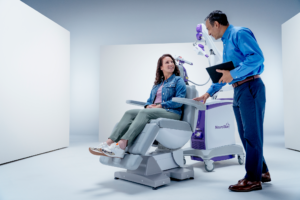
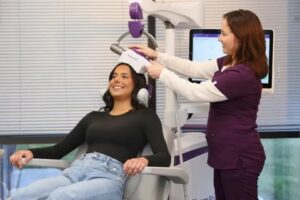
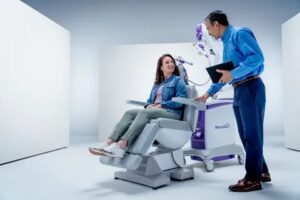
TMS does not require surgery or anesthesia. During treatment, a magnetic coil rests against the scalp. The coil produces magnetic pulses that pass through the skull and create electrical activity in a targeted area of the brain.
Intermittent theta burst stimulation, or iTBS, uses a specific pulse pattern. Each burst contains three magnetic pulses delivered at 50 Hz. The bursts then repeat at 5 Hz, which is the theta rhythm that gives the treatment its name.
The difference is easy to see during a treatment visit. A commonly studied iTBS session uses 600 pulses and takes about three minutes. A conventional 10 Hz TMS session can take about 37.5 minutes under the protocol studied in the THREE-D trial.
The shorter session time may make treatment easier to schedule, but the full course still includes repeated visits. A patient may receive treatment five days per week for several weeks, depending on the clinical protocol.
Understanding the mechanics behind this noninvasive procedure helps clarify why it serves as an effective option for treatment-resistant depression:
- Anatomical Targeting: Clinicians position the magnetic coil over the left dorsolateral prefrontal cortex (DLPFC). This specific brain region plays a central role in regulating mood and emotional processing networks.
- Noninvasive Pulse Delivery: The device produces focused magnetic pulses that pass painlessly through the skull. These pulses induce localized electrical currents that stimulate underactive neurons involved in depression.
- Specific Burst Pattern: Intermittent theta burst stimulation delivers magnetic pulses in rapid clusters. Each burst contains three pulses at 50 Hz, which repeat at 5 Hz to mimic natural theta brain rhythms.
- Condensed Session Duration: A standard 600-pulse iTBS session takes roughly three minutes to complete. This represents a significant time reduction compared to standard 37.5-minute TMS sessions studied in clinical trials.
- Repeated Treatment Visits: Although individual daily appointments are brief, a full therapeutic course still requires regular clinic visits. Patients typically attend sessions five days per week over several consecutive weeks.
How Effective Is Intermittent Theta Burst For Depression?
Intermittent theta burst has strong clinical evidence for depression, including randomized research comparing it directly with conventional 10 Hz TMS.
The most widely cited comparison is the 2018 THREE-D randomized non-inferiority trial. The study included 414 adults with major depressive disorder and compared iTBS with 10 Hz TMS.
The researchers found that iTBS was non-inferior to 10 Hz TMS for reducing depression symptoms after four weeks. In plain language, iTBS did not perform meaningfully worse than the conventional treatment within the limits set by the study.
“iTBS was statistically noninferior to 10-Hz TMS for the treatment of major depressive disorder.” – PubMed, 2018
The treatment time was different, though. The iTBS sessions took about three minutes, while the 10 Hz TMS sessions took about 37.5 minutes under the study protocol.
Theta burst effectiveness should therefore be discussed in terms of evidence, not promises. No TMS protocol can guarantee remission or a specific response for every patient.
Robust clinical evidence supports the efficacy of iTBS for major depressive disorder through large-scale comparative research:
- The THREE-D Trial Baseline: The landmark 2018 THREE-D randomized trial evaluated 414 adults diagnosed with major depressive disorder to measure treatment outcomes.
- Proven Non-Inferiority: Researchers confirmed that iTBS achieved clinical symptom reductions that were non-inferior to traditional 10 Hz high-frequency TMS protocols over four weeks.
- Significant Time Efficiency: While clinical efficacy outcomes remained comparable, iTBS delivered these results in approximately three minutes per session versus 37.5 minutes for standard TMS.
- Patient Screening Requirements: Efficacy depends heavily on proper patient selection, accurate cortical mapping, and consistent adherence to the full multi-week treatment protocol.
- Evidence Over Guarantees: Clinical trial data demonstrates strong population-level response rates, but no neuromodulation protocol can guarantee individual remission for every patient.
What Does Research Show About Treatment Resistant Depression?
Research supports iTBS as an option for adults with treatment-resistant depression when the treatment is clinically appropriate.
Treatment-resistant depression generally refers to depression that has not improved enough after adequate treatment attempts. The exact definition can differ between studies and clinical settings.
The THREE-D trial provides the strongest direct comparison between iTBS and conventional 10 Hz TMS. More recent research has also examined different theta burst schedules, including accelerated protocols and bilateral stimulation.
Those studies do not all produce identical results. The reason is straightforward: the protocols differ.
Researchers may change the treatment target, number of pulses, number of sessions, daily schedule, or stimulation pattern. Patient groups can also differ in age, treatment history, symptom severity, and previous response to medication.
“The new aTBS protocol was safe and effective for TRD.” – JAMA Psychiatry
So, a positive study of one iTBS protocol should not be treated as proof that every theta burst protocol will produce the same result.
Is iTBS Faster Than Conventional TMS?

iTBS is faster per treatment session than conventional 10 Hz TMS. The strongest head-to-head evidence comes from the THREE-D trial, where the iTBS session took about three minutes compared with about 37.5 minutes for the conventional 10 Hz protocol.
But the shorter session does not necessarily shorten the full course. Standard iTBS may still involve frequent visits over several weeks, while accelerated TMS therapy uses multiple sessions per day to compress the overall treatment schedule.
A full treatment course also includes repeated sessions. The number of visits depends on the clinical plan and the specific TMS device.
| Feature | iTBS | 10 Hz TMS |
| Pulse pattern | Theta burst | 10 Hz trains |
| Session time in THREE-D | About 3 minutes | About 37.5 minutes |
| Common depression target | Left DLPFC | Left DLPFC |
| Direct comparison | Non-inferior in THREE-D | Comparator treatment |
| Main difference | Shorter stimulation | Longer stimulation |
The main difference is how the magnetic pulses are arranged. iTBS uses short bursts that repeat at a theta frequency, while conventional high-frequency TMS uses longer trains of pulses at a set frequency.
Clinical choice should depend on more than appointment length. A clinician may consider the patient’s diagnosis, previous treatment response, medical history, treatment target, device, and the evidence for the proposed protocol.
How Should You Prepare For Daily Clinic Visits?
Knowing what to expect during your daily visits makes your therapeutic experience smoother and less stressful. While individual appointments run remarkably fast, taking time to prepare ensures you remain comfortable. You do not need to make major changes to your daily routine before arriving at the clinic. Following a few simple guidelines helps you get the most out of each visit.
First, maintain your normal sleep schedule and eating habits before every scheduled appointment. Arriving well-rested and properly hydrated reduces the likelihood of experiencing mild scalp sensitivity or fatigue. You should also take your regular medications unless your treating clinician explicitly instructs you otherwise. Always inform the treatment team if your medication dosage changes during your treatment course.
Second, wear comfortable clothing and avoid wearing metal hair accessories, heavy jewelry, or magnetic items. Metal objects near your head or neck can interfere with the magnetic field produced by the stimulation coil. If you wear glasses, the technician will ask you to remove them before placing the treatment coil against your scalp. You can put them back on immediately after the brief session finishes.
Finally, plan to arrive a few minutes before your scheduled appointment time to check in and relax. The clinical staff will guide you to the treatment chair and position the coil accurately using your personalized mapping coordinates. After completing the quick stimulation pattern, you can immediately drive yourself home or return to work without any recovery period.
What Are Three Minute Sessions Like?

Three minute sessions are brief periods of magnetic stimulation in which the TMS coil delivers the prescribed iTBS pulse pattern.
During treatment, the patient remains awake and seated. The coil rests against the scalp near the treatment target. Each magnetic pulse can produce a tapping sensation and a clicking sound.
Some patients notice movement of nearby scalp or facial muscles. Scalp discomfort or headache can also occur, particularly early in treatment.
The treatment team can adjust the stimulation intensity when appropriate. The goal is to deliver the prescribed treatment while keeping the patient comfortable and within the safety limits of the device.
How Is Theta Burst Safety Managed?

Theta burst safety depends on appropriate patient screening, correct device settings, accurate coil placement, and monitoring during treatment.
TMS is generally considered a noninvasive treatment. However, it is not risk-free.
Headache and scalp discomfort are among the more common effects reported during TMS. Some patients may also notice facial or scalp muscle movement during stimulation.
A seizure is a rare but serious potential adverse event. Clinical teams use established stimulation limits and review medical factors that could affect seizure risk before treatment.
The FDA’s TMS guidance also identifies precautions involving implanted devices near the head, neurological conditions, seizure history, and other medical factors. Device labeling provides the specific warnings and precautions that apply to each system.
Patients should tell the treating clinician about implanted medical devices, metal near the head, a history of seizures, neurological conditions, and medications that may affect seizure risk.
Hearing protection is also used during TMS because the treatment coil produces loud clicking sounds. The FDA guidance specifically addresses hearing protection as part of safe TMS use.
What Should You Know About TMS Treatment Cost?
TMS treatment cost varies by clinic, location, device, insurance coverage, and the number of sessions in the treatment plan. A fixed price cannot accurately represent every treatment course, particularly when considering TMS therapy in Franklin, TN.
An accelerated protocol may involve more sessions during each treatment day, but the total cost depends on how the clinic structures its treatment program. Insurance coverage can also affect the patient’s out-of-pocket cost.
A clinic may quote a treatment range based on the number of sessions. Additional evaluation, mapping, follow-up visits, or continuation treatment may affect the final amount.
Insurance policies also have their own requirements. Coverage may depend on the diagnosis, previous treatment history, medical criteria, and the specific TMS service being billed.
Before treatment begins, the patient should ask for a written estimate. The estimate should identify what is included and whether additional sessions could change the total cost.
Is Theta Burst Stimulation A Good Option For Depression?
If you’re considering TMS for depression, theta burst stimulation may offer a shorter treatment session without giving up the evidence behind TMS. iTBS can deliver stimulation in about three minutes, but the right protocol still depends on your treatment needs and clinical evaluation. Shorter sessions don’t mean every patient will respond the same way.
For someone whose depression hasn’t improved enough with previous treatment, iTBS may be worth discussing with a qualified clinician. Ask which protocol is recommended and what follow-up care you’ll receive. TMS of Tennessee offers NeuroStar Advanced TMS Therapy in Franklin for adults with major depression, using personalized brain mapping as part of a supervised treatment plan. Contact their team to learn whether TMS may be appropriate for you.
FAQs
How Long Are Three Minute Sessions?
Three minute sessions describe the approximate stimulation time for a standard iTBS treatment under commonly studied settings. The complete clinical visit can take longer because the patient must be positioned and the treatment settings confirmed.
Is Intermittent Theta Burst Effective For Depression?
Intermittent theta burst is supported by randomized clinical evidence for depression and has produced outcomes comparable to 10 Hz TMS in the THREE-D trial. Individual treatment response can still vary.
Is iTBS Better Than Conventional TMS?
iTBS has not been shown to be universally better than conventional TMS. The THREE-D trial found iTBS non-inferior to 10 Hz TMS, while the shorter session time provides a practical advantage.
Is Theta Burst Safety Different From Standard TMS?
Theta burst stimulation shares many of the same safety considerations as other TMS methods, including headache, scalp discomfort, and a rare seizure risk. The exact safety profile depends on the device and stimulation protocol.
Can TMS Help During A Mental Health Crisis?
TMS is not an emergency treatment for an immediate mental health crisis. If someone is in immediate danger or has thoughts of suicide, call or text 988 in the United States or contact local emergency services.
References
- https://pubmed.ncbi.nlm.nih.gov/29710076/
- https://jamanetwork.com/journals/jamapsychiatry/fullarticle/2830861