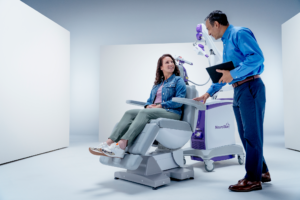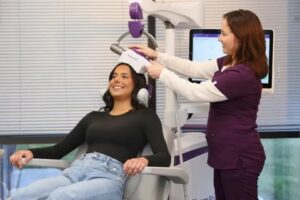
TMS is a non-invasive outpatient treatment that uses magnetic pulses to stimulate brain areas linked to mood regulation. Most treatment courses last 3 to 6 weeks. Choosing the right clinic requires evaluating treatment protocols, clinical fit, insurance coverage, and safety standards rather than just driving distance. The FDA has cleared certain systems for specific diagnoses, making clinical compatibility essential. Review this practical guide to compare providers and select the right care plan.
Key Takeaways
- Check clinical fit: Review the provider, FDA-cleared device, treatment plan, and safety screening.
- Know the coverage: TMS usually requires several sessions. Insurance rules vary by diagnosis and plan.
- Keep expectations realistic: TMS may help some patients, but results vary and side effects can occur.
What Should You Know Before Searching for TMS?
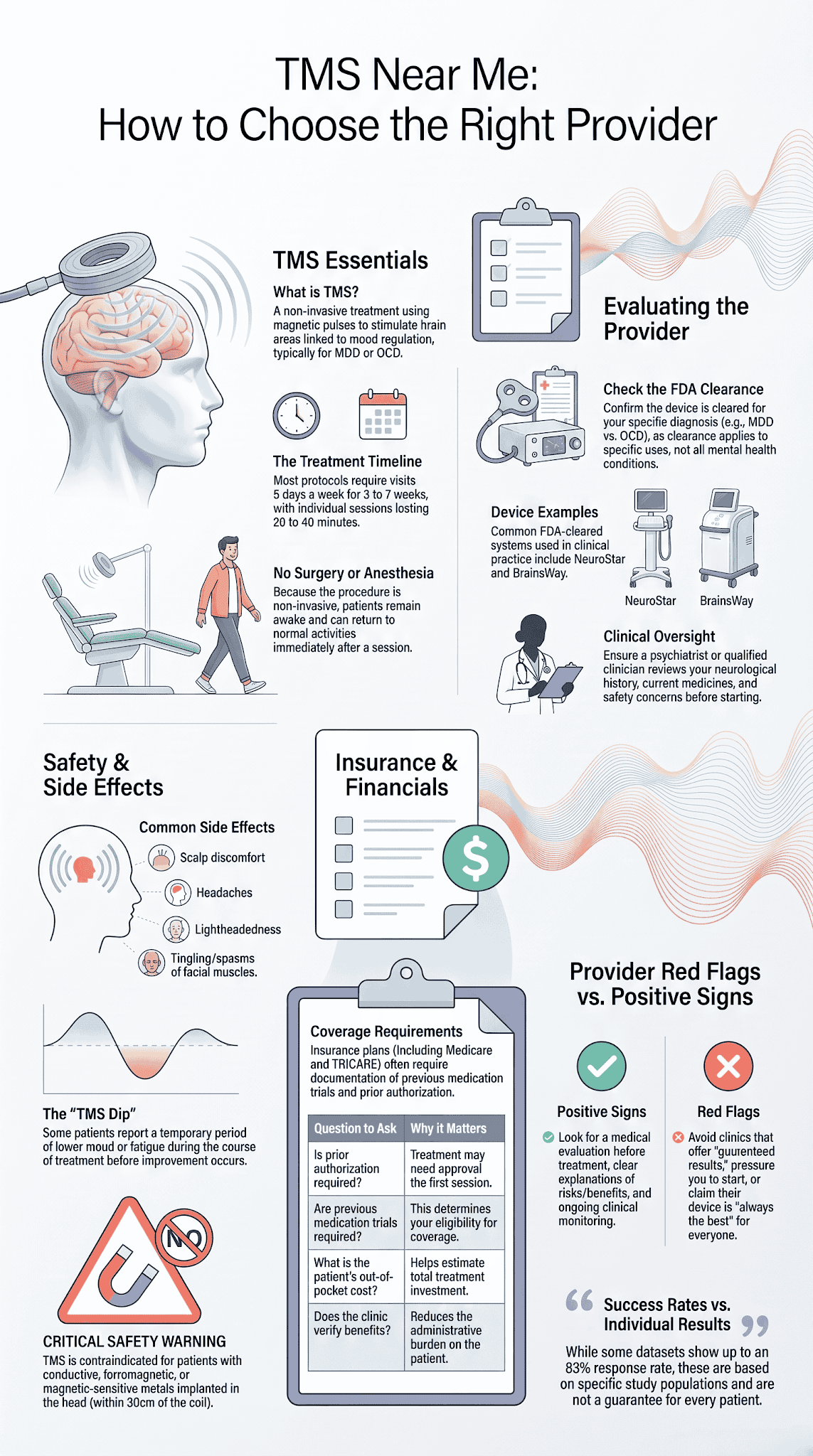
TMS uses magnetic pulses to stimulate a specific area of the brain during an outpatient visit. Most sessions take about 20 to 40 minutes, depending on the device and protocol. There’s no surgery, and anesthesia isn’t needed.
TMS is used most often for major depressive disorder, or MDD. Some systems also have FDA clearance for obsessive-compulsive disorder, or OCD, and other specific indications. That detail matters, which is why seeking targeted OCD treatment through cleared protocols ensures treatment matches the patient’s specific diagnosis. FDA clearance applies to a particular use, not to every mental health condition.
So before searching for the nearest clinic, confirm that TMS could fit the patient’s diagnosis. A psychiatrist or another qualified clinician should review the diagnosis, past treatments, current medicines, neurological history, and possible safety concerns.
Treatment also takes time. A standard course may involve several visits each week for about 3 to 6 weeks. Some protocols use a different schedule. The exact plan depends on the device, diagnosis, treatment approach, and clinical judgment.
A nearby clinic may be convenient, but convenience isn’t enough. A provider should be able to explain why its treatment approach fits the patient.
Questions to ask a TMS provider
- Which FDA-cleared system is used?
- What condition is being treated?
- Which treatment protocol is planned?
- How is the treatment target identified?
- How many sessions are expected?
- Who supervises the treatment?
- How are side effects handled?
Look for clear answers. If a clinic can’t explain its protocol in plain language, that’s worth considering before scheduling treatment.
How Should You Compare TMS Devices and Treatment Protocols?
TMS devices aren’t all cleared for the same uses. Manufacturers have different systems, and each system may use a specific treatment method. NeuroStar and BrainsWay are two examples used in clinical practice.
The device name alone shouldn’t decide the treatment. What matters is whether the system is appropriate for the diagnosis, such as determining whether a patient requires standard depression protocols or specialized anxiety treatment, and whether the clinic uses it according to its cleared indication and clinical protocol.
For example, a patient comparing local TMS clinics can ask why the provider selected a particular system. The clinician should be able to explain the reason without relying on marketing claims.
Treatment targeting matters, too. The provider should explain how the stimulation area is located and how treatment intensity is set. Some clinics may discuss advanced targeting methods, including brain imaging. These approaches can have a role in research, but they aren’t automatically required for standard TMS treatment.
Keep the comparison practical.
| Factor | Question to ask |
| Device | Which TMS system is used? |
| FDA clearance | What condition is it cleared for? |
| Targeting | How is the treatment area located? |
| Protocol | How many sessions are planned? |
| Experience | How often does the clinic treat this condition? |
| Schedule | Can the visits fit the patient’s routine? |
The provider’s experience with the relevant condition can matter more than the brand printed on the machine. That’s an easy detail to miss when comparing clinics online.
Patients should also ask whether treatment targeting is part of routine clinical care or part of a research program. Technical terms can sound impressive, but they don’t replace a proper medical evaluation.
What Should You Know About the TMS Dip, Fatigue, and Side Effects?
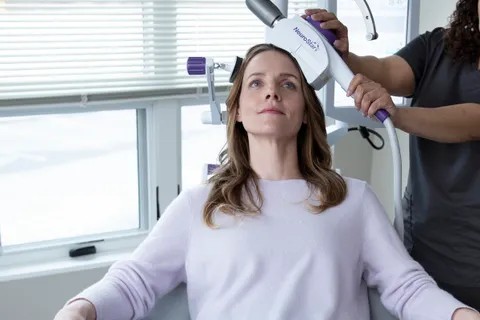
TMS is generally well tolerated, but side effects can occur. The most common problems include discomfort around the treatment area and headache. Some people also report fatigue.
The sensation can take some getting used to. During treatment, patients may hear repeated clicking from the TMS coil and feel tapping or muscle movement near the stimulation site.
As noted by Mayo Clinic:
“Generally, TMS is considered safe and well-tolerated. However, it can cause some side effects. Side effects may include: Scalp discomfort and pain. Headache. Tingling, spasms or twitching of facial muscles. Lightheadedness.” , Mayo Clinic
Some patients also report what is commonly called the “TMS dip.” This term usually refers to a temporary period of lower mood, tiredness, or reduced energy during treatment. Patient reports can help explain what an experience may feel like, but they don’t prove that every patient will have the same response.
No two patients respond in exactly the same way.
- Scalp discomfort may occur.
- Headaches can occur after treatment.
- Fatigue may occur.
- Mood changes should be reported.
A qualified TMS provider should review possible side effects before treatment begins. The clinic should also explain which symptoms need prompt medical attention.
But a major drop in mood shouldn’t be dismissed as a normal part of treatment. New or worsening symptoms need to be discussed with the treating clinician, especially if they are severe or continue.
Patients shouldn’t judge the treatment from one session, either. TMS is usually given as a course of treatment, and the clinician should monitor progress over time.
For that reason, ask how the clinic tracks symptoms and decides whether treatment is helping. Good monitoring gives both the patient and clinician a clearer picture of what’s happening.
How Can You Evaluate TMS Effectiveness and Insurance Coverage?

TMS can help some people with treatment-resistant depression, but results vary. It isn’t a guaranteed treatment, and the evidence for TMS depends on the diagnosis and the specific treatment protocol.
Clinical trials and meta-analyses support repetitive TMS for major depressive disorder. Research evaluating depression TMS protocols has found that active TMS can improve depressive symptoms more than sham treatment in some patients. Still, response is different from remission, and neither means that every patient will improve.
That distinction matters when a clinic presents a large success percentage. For example, NeuroStar reports an 83% response rate and a 62% remission rate in a treatment-resistant depression dataset. Those numbers describe a specific study population and treatment setting. They shouldn’t be treated as a promise for an individual patient.
Ask about the evidence behind any number a provider quotes.
What evidence should you review?
- Response rates
- Remission rates
- Randomized clinical trials
- Meta-analyses
- Evidence for the specific diagnosis
- Follow-up results
Insurance is a separate issue. Medicare, TRICARE, and private insurers may cover TMS under certain conditions, but policies differ. A plan may require a specific diagnosis, previous medication trials, documentation of treatment resistance, or prior authorization.
So ask the clinic to verify benefits before treatment begins.
| Insurance question | Why it matters |
| Is prior authorization required? | Treatment may need approval first. |
| Are previous medication trials required? | This may affect eligibility. |
| What will the patient owe? | Helps estimate treatment costs. |
| Does the clinic verify benefits? | May reduce paperwork. |
| Are follow-up sessions covered? | Coverage may differ after treatment. |
A clinic can help with insurance verification, but the insurer makes the final coverage decision. Get the coverage details in writing when possible. It’s much easier to deal with costs before treatment starts than after several weeks of visits.
What Should You Look for in a Local TMS Clinic?
The closest TMS clinic isn’t automatically the right one. Clinical oversight, patient selection, safety screening, and clear communication should come first.
A good provider should explain the diagnosis being treated and why TMS is being considered. The clinician should also review the patient’s medical history, current medications, previous treatment, and any implanted medical devices that could affect treatment.
The clinic should explain the treatment schedule, expected side effects, and what happens if symptoms don’t improve. Pricing and insurance information should be clear, too.
Positive signs
- Clear treatment explanation
- Medical evaluation before treatment
- Discussion of benefits and risks
- Experience with the relevant condition
- Clear appointment schedule
- Insurance assistance
- Ongoing clinical monitoring
Red flags
- Guaranteed results
- Claims that TMS cures everyone
- Pressure to start treatment
- Unclear pricing
- Dismissal of side effects
- Claims that one device is always best
- Unclear use outside FDA-cleared indications
Be cautious with promises. Depression is complex, and no responsible clinician can guarantee that TMS will work for a particular person.
The American Psychiatric Association supports evidence-based assessment and treatment for depressive disorders. That makes the clinical evaluation an important part of the decision, not a formality before using the machine.
And there’s a practical issue, too. TMS often requires frequent visits. A clinic that is 10 minutes farther away may be a better choice if it offers the appropriate treatment and the schedule is easier to follow.
How Can TMS of Tennessee Fit Into Your Search?
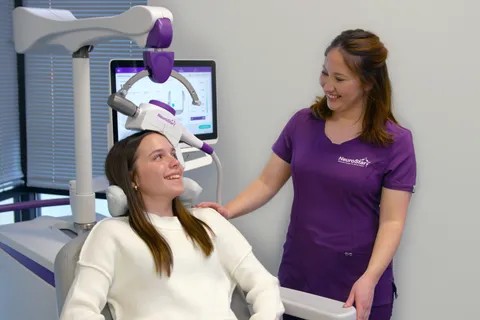
TMS of Tennessee can be compared with other providers by looking at its treatment approach, clinical evaluation, scheduling, safety screening, insurance process, and follow-up care.
TMS of Tennessee offers NeuroStar Advanced TMS Therapy in Franklin for eligible patients seeking a non-drug, non-invasive treatment for major depression. NeuroStar uses magnetic pulses to stimulate targeted brain areas. Treatment does not require anesthesia or sedation.
The clinic describes treatment sessions that last about 19 minutes and are typically scheduled five days per week for seven weeks. Treatment schedules can vary, though. The treating clinician should determine the plan based on the patient’s diagnosis and clinical needs.
NeuroStar has FDA-cleared indications for specific conditions, including major depressive disorder and OCD. The manufacturer also describes an indication related to anxious depression. That doesn’t mean the system is appropriate for every psychiatric condition.
Safety screening matters before treatment. Certain types of metal near the head and some implanted devices may prevent treatment or require further review. A history of seizures or other neurological concerns may also need special consideration.
Data from the U.S. Food and Drug Administration demonstrates:
“TMS devices are contraindicated for use in patients who have conductive, ferromagnetic or other magnetic-sensitive metals implanted in their head or within 30 cm of the treatment coil. Failure to follow this restriction could result in serious injury or death.” , U.S. Food and Drug Administration
Patients considering TMS of Tennessee can ask:
- Is TMS appropriate for my diagnosis?
- Is the device cleared for that use?
- How is the treatment target identified?
- How many sessions are expected?
- Which side effects should I report?
- Could my medical history affect eligibility?
- Will the clinic help verify insurance?
- What payment options are available?
No single answer determines whether a clinic is right. Look at the full picture.
How to Choose the Best TMS Provider
Choosing a TMS clinic requires evaluating device clearances, safety protocols, and insurance coverage over location alone. During your clinical evaluation, discuss your full medical and medication history to ensure treatment fits your diagnosis. TMS of Tennessee offers comprehensive evaluations and NeuroStar Advanced TMS Therapy for treatment-resistant depression, guiding you through brain mapping and insurance verification. Contact TMS of Tennessee today to explore your care options.
If you or someone you know is experiencing a mental health crisis, call or text 988 immediately to connect with the Suicide & Crisis Lifeline for free, confidential support.
FAQs
How do I find quality TMS therapy near me?
Look for a provider that treats your diagnosis and has qualified clinical staff. Ask about the evaluation, treatment plan, safety screening, and follow-up care. Patient reviews can offer useful information, but they should not replace a medical evaluation. A consultation can help determine whether TMS is appropriate for you.
What should I ask a TMS clinic before treatment?
Ask how many sessions you may need, how often they are scheduled, and what side effects to expect. Ask how the clinic tracks your symptoms and when you will meet with the treating clinician. These questions can help you decide whether a TMS clinic fits your needs.
How do I know if a TMS treatment center is right for me?
Look beyond location. Ask about the team’s experience with your condition, how they explain risks and benefits, and how they monitor your care. You should also understand the treatment schedule, cost, and insurance requirements before starting at a TMS treatment center.
How much time should I plan for TMS treatment?
TMS usually involves repeated outpatient visits over several weeks. The exact schedule depends on your diagnosis and treatment protocol. Before starting TMS treatment, ask how often you will need appointments, how long each visit lasts, and what happens if you miss a session.
What should I bring to a transcranial magnetic stimulation consultation?
Bring your current medication list and information about previous treatments. Also tell the clinician about relevant medical conditions, seizure history, neurological problems, or implanted medical devices. This information can help determine whether transcranial magnetic stimulation is safe and appropriate for you.
References
- https://www.mayoclinic.org/tests-procedures/transcranial-magnetic-stimulation/about/pac-20384625
- https://www.fda.gov/medical-devices/guidance-documents-medical-devices-and-radiation-emitting-products/repetitive-transcranial-magnetic-stimulation-rtms-systems-class-ii-special-controls-guidance