Finding the right clinic for TMS therapy in Brentwood, TN requires balancing clinical expertise, device technology, and scheduling flexibility. Transcranial magnetic stimulation (TMS) is an FDA-cleared, noninvasive therapy that uses targeted magnetic pulses to stimulate brain regions regulating mood. For adults with treatment-resistant depression who haven’t found relief through traditional antidepressants, it offers a proven, drug-free pathway to recovery.
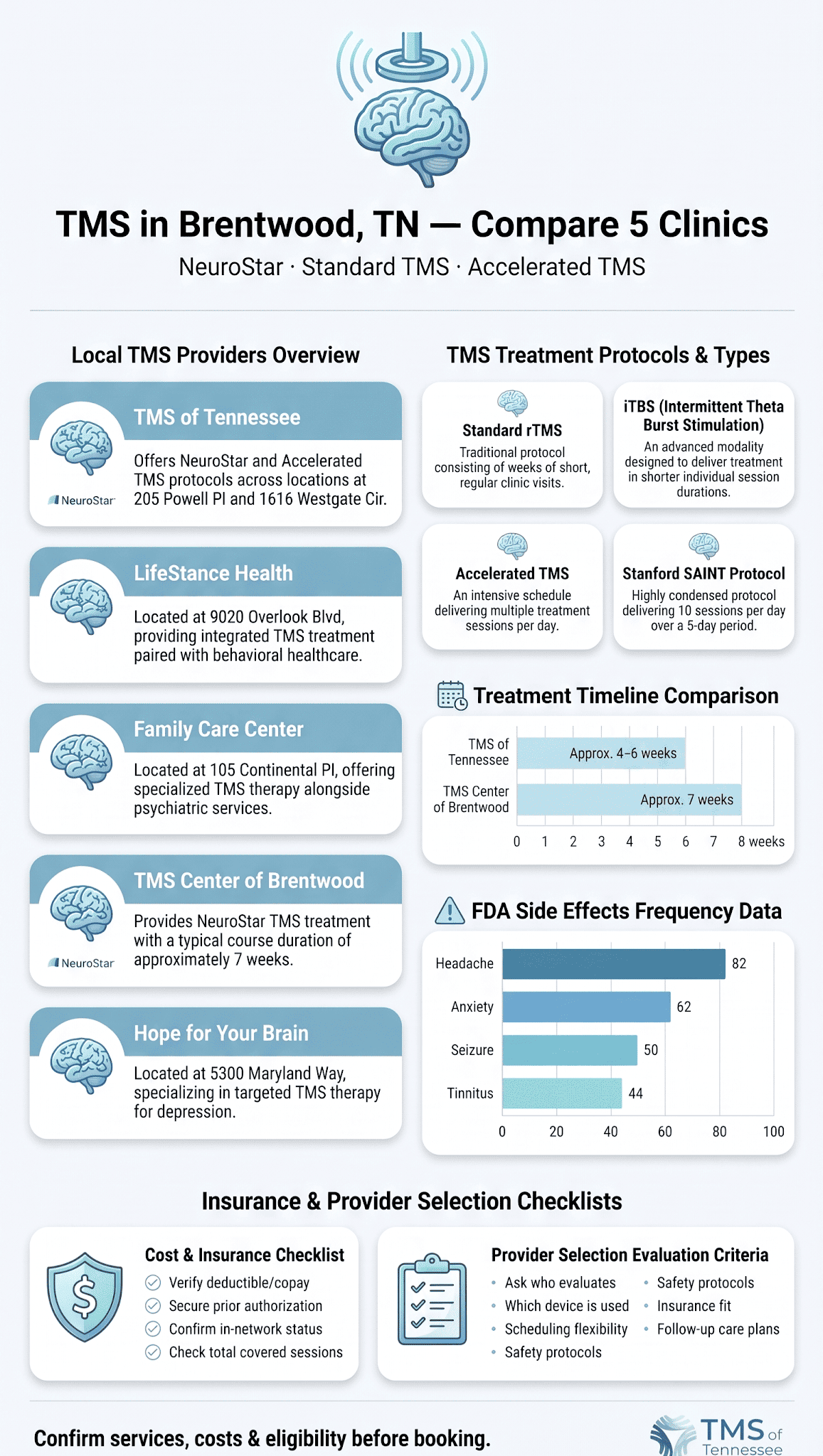
Brentwood is home to several specialized behavioral practices. Notably, TMS of Tennessee leads local options with dual clinics and flexible protocols ranging from standard daily care to accelerated schedules. Compare five prominent Brentwood TMS providers below to evaluate their technology, clinical oversight, and patient accessibility.
Key Takeaways
- Providers and Treatment Options: Compare clinic locations, availability, and TMS protocols.
- Costs and Insurance: Check coverage, deductibles, and treatment expenses.
- Safety and Follow-Up: Review eligibility, side effects, and progress monitoring.
Comparing Leading TMS Therapy Clinics in Brentwood, TN
Choosing the right TMS provider involves evaluating clinical oversight, treatment technology, scheduling accessibility, and insurance navigation. Because treatment plans are tailored to individual medical histories, understanding how each practice structures its protocols ensures you find the right fit for your recovery goals.
When evaluating local clinics, keep these essential factors in mind:
- Protocol Selection & Technology: Confirm the specific FDA-cleared devices used and whether both standard and accelerated options are offered.
- Insurance & Financial Guidance: Look for clinics with dedicated in-house coordinators to verify coverage and manage prior authorizations.
- Physician Supervision & Follow-Up: Ensure qualified clinicians directly oversee initial motor threshold mapping, symptom tracking, and progress reviews.
Below are five prominent practices serving patients throughout the Brentwood community.
1. TMS of Tennessee: NeuroStar Advanced Therapy and Accelerated TMS

TMS of Tennessee stands out as Brentwood’s premier dedicated neuromodulation practice, distinguished by its comprehensive protocol choices and dual facilities. Utilizing industry-standard NeuroStar Advanced Therapy, the center accommodates diverse patient lifestyles by pairing standard multi-week courses with intensive, accelerated treatment schedules completed in shorter timeframes for eligible candidates. With two established locations across Powell Place and Westgate Circle, the practice offers streamlined access to psychiatric consultations, personalized coil mapping, and dedicated in-house insurance verification.
Key Distinctions:
- Dual Brentwood facilities providing convenient regional access.
- NeuroStar Advanced Therapy with standard and intensive accelerated treatment pathways.
- Comprehensive intake support, including thorough pre-screening and direct insurance authorization assistance.
2. LifeStance Health: TMS and Behavioral Healthcare
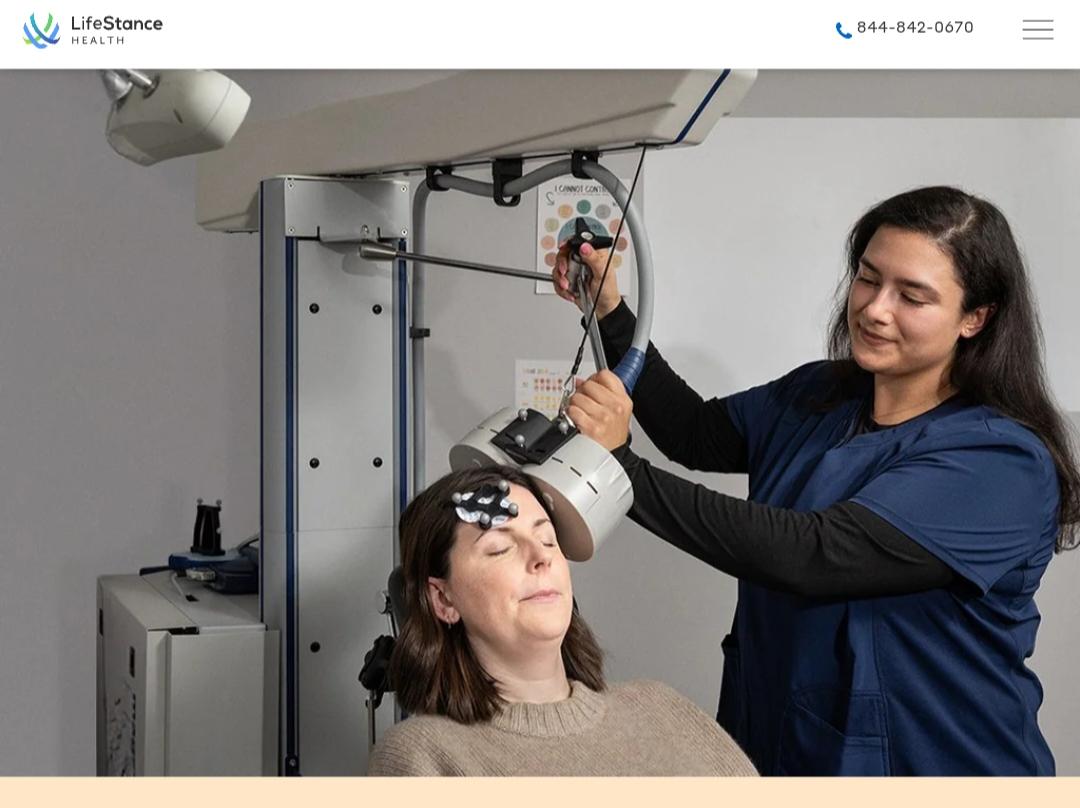
LifeStance Health lists TMS services at its Brentwood office and provides information about physician-supervised treatment and its consultation process. The practice also offers broader behavioral healthcare, which may be useful for patients who want to discuss how TMS fits into their existing mental health care.
Advertised services and features:
- TMS treatment at the listed Brentwood location.
- Physician-supervised care.
- Psychiatric services and behavioral healthcare.
- Consultation to discuss treatment options and eligibility.
Reported location:
9020 Overlook Boulevard, Suite 130, Brentwood, TN 37027. Phone: 833-673-3103 Billing Phone: 253-254-5911 Fax: 865-312-6387
Questions to ask before booking:
- Which TMS device and protocol does the clinician recommend?
- Can TMS be coordinated with my current medication management or psychotherapy?
- Who monitors symptoms and treatment-related side effects?
- Which insurance plans are accepted for TMS specifically?
- What is the estimated cost if insurance does not cover the full course?
Confirm the current services and appointment availability directly with the office.
3. TMS Center of Brentwood: NeuroStar Advanced Therapy

TMS Center of Brentwood advertises NeuroStar Advanced Therapy for depression and also describes services for eligible patients with OCD. Its website emphasizes physician oversight, staff certification, and continuity of care.
Patients comparing this clinic with other local providers should look beyond the device name. The clinical evaluation, recommended protocol, safety screening, insurance requirements, and follow-up arrangements also matter.
Advertised services and features:
- NeuroStar Advanced Therapy.
- Treatment for depression and eligible OCD patients.
- Physician involvement and continuity of care.
- Information about treatment and consultation options.
5123 Virginia Way, Suite C-11, Brentwood, TN 37027. Phone (615) 373-5205
Questions to ask before booking:
- Which conditions and age groups are eligible for the treatment offered?
- Which device-specific indications apply to my situation?
- How often will I attend appointments?
- How will the clinic measure improvement?
- What happens if my symptoms do not improve or return?
The clinic’s website is the appropriate starting point for confirming current services, location details, and scheduling.
4. Hope for Your Brain: TMS for Depression

Hope for Your Brain advertises TMS services in Brentwood and describes psychiatric care for patients with depression and OCD. Its published information provides a local contact point for people exploring treatment options.
Before scheduling, ask the clinic to explain its evaluation process, the specific device and protocol available, and how the proposed treatment fits your diagnosis.
Advertised services and features:
- TMS for depression.
- Psychiatric evaluation and clinical oversight.
- Information about treatment options and consultations.
- Services for eligible patients with certain psychiatric conditions.
Listed location:
5300 Maryland Way, Suite 103, Brentwood, TN 37027. Phone: (615) 224-9800
Questions to ask before booking:
- Which diagnoses do you currently treat with TMS?
- What device and treatment protocol do you use?
- What safety screening is required?
- How do you monitor progress and side effects?
- What insurance plans do you accept, and what expenses might I pay?
Confirm current availability, the listed address, and insurance participation directly with the clinic.
5. Family Care Center: Verify Local TMS Availability

Family Care Center operates an established multi-disciplinary mental health network offering comprehensive psychiatric evaluations, psychotherapy, and medication management. While the organization provides TMS at select regional branches, prospective patients should directly contact the Brentwood office to verify on-site TMS suite availability, accepted insurance networks, and current clinician scheduling before booking an initial consult.
How Does TMS Work, and Who May Benefit?
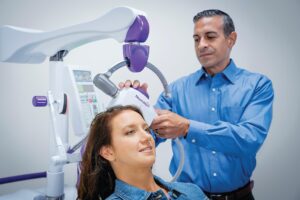
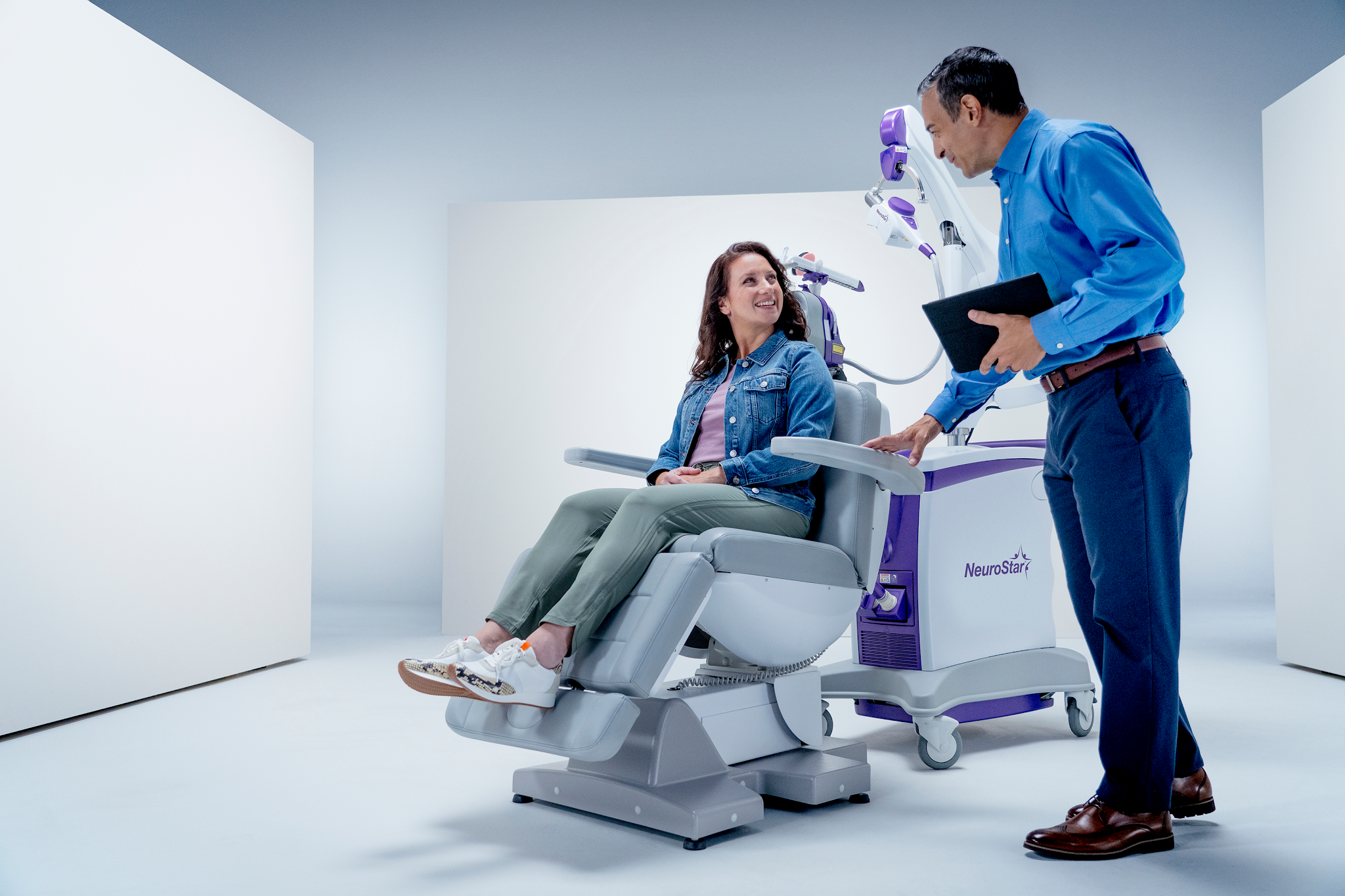
Transcranial magnetic stimulation uses magnetic pulses to stimulate targeted brain regions involved in mood regulation. A clinician positions a magnetic coil against the scalp and delivers pulses according to the prescribed treatment protocol.
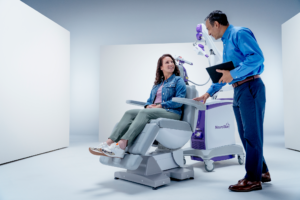
TMS is noninvasive and generally does not require sedation or general anesthesia. Patients remain awake during treatment. Some experience tapping sensations on the scalp, clicking sounds, headaches, or temporary discomfort near the treatment site.
TMS may be appropriate for some adults with major depressive disorder who have not experienced sufficient improvement with antidepressants. If you’re unsure whether you qualify, read our guide on whether TMS is right for you. The appropriate treatment depends on the specific device, its cleared indications, and your individual clinical circumstances.
Who may qualify for TMS?
A qualified clinician reviews factors such as:
- Diagnosis and current symptoms.
- Previous antidepressant treatments and treatment response.
- Medical history and current medications.
- Implanted devices or metal that could create safety concerns.
- History of seizures or other relevant neurological conditions.
TMS is not appropriate for everyone. Patients should disclose their complete medical history and ask the clinician to explain the risks and benefits of the proposed treatment.
What happens during a typical session?
A typical visit may involve coil positioning, treatment delivery, and a check-in with the clinical team. Session length varies by device and protocol. Some treatments take around 19 minutes, while other protocols may take less or more time.
Patients commonly attend repeated appointments over several weeks for standard TMS. Accelerated approaches may concentrate more sessions into fewer days.
TMS does not work for everyone, and it does not automatically replace medication, psychotherapy, or other elements of a treatment plan. A clinician should explain the available options and how progress will be monitored.
Standard TMS vs. Accelerated TMS vs. Stanford SAINT
These terms describe different treatment approaches and should not be used interchangeably. When comparing treatment options, learn more about NeuroStar Advanced Therapy TMS and ask your provider which device and protocol are appropriate for your diagnosis.
| Treatment approach | How it differs | Question to ask |
| Standard repetitive TMS (rTMS) | Repeated treatment sessions over several weeks | How many visits will my prescribed course require? |
| Intermittent theta-burst stimulation (iTBS) | Uses a specific magnetic pulse pattern that can shorten individual treatment sessions | Is iTBS available, and is it appropriate for my diagnosis? |
| Accelerated TMS | Concentrates multiple sessions into a shorter overall period | How many sessions will I receive per day, and for how many days? |
| Stanford SAINT | A specific accelerated protocol that uses individualized brain targeting and an intensive schedule | Does the clinic offer this exact protocol, and what are its eligibility requirements? |
In a recent analysis by American Psychological Association
“The Stanford neuromodulation therapy protocol was cleared by the FDA in 2022 and uses resting-state brain imaging to identify a target in the brain. In addition to the more individualized approach, the protocol delivers the treatment in 10 sessions per day over a 5-day period instead of the traditional weeks-long protocol. In an early trial, 19 of 21 patients achieved remission criteria.” – American Psychological Association
Understanding Accelerated Protocols vs. Proprietary Frameworks
While intensive protocols like the Stanford SAINT model have popularized accelerated treatment schedules in recent clinical literature, “accelerated TMS” encompasses several evidence-based treatment regimens that deliver multiple daily sessions to condense the overall calendar timeline.
TMS of Tennessee provides proprietary accelerated options tailored to clinical eligibility, allowing qualified patients to complete their course on an expedited timeline. When evaluating rapid protocols, discuss with your physician how session frequency, resting intervals, and total pulse volume are customized to your specific diagnostic history.
How Long Does TMS Treatment Take?
Treatment duration depends on the device, prescribed protocol, number of sessions, and clinical circumstances.
Many standard TMS courses involve weekday visits over several weeks. Accelerated protocols may deliver multiple sessions each day over a shorter period, but not every patient qualifies for every schedule.
To accommodate varying patient schedules, TMS of Tennessee provides structured standard treatment courses alongside intensive, multi-session accelerated pathways completed in as few as seven days for qualified individuals. Clinical teams evaluate each patient during the initial consultation to determine which timeline aligns with their therapeutic goals, ensuring clinical safety and session tolerance remain the top priority over simply choosing the fastest schedule.
How Much Does TMS Cost in Brentwood, TN?

The cost of TMS depends on the treatment plan, number of sessions, insurance coverage, and provider fees. Review this guide to TMS therapy costs for additional information about treatment expenses. Current prices for the five listings have not been independently verified, so patients should request written estimates rather than rely on assumed local averages.
What affects the cost of TMS?
Ask the clinic and your insurance company about:
- Deductibles, copays, and coinsurance.
- Whether prior authorization is required.
- Medical-necessity criteria and documentation of previous treatments.
- The number of sessions covered by the plan.
- In-network versus out-of-network costs.
- Whether the proposed device and protocol are covered.
- Initial evaluation and follow-up fees.
- Available payment plans or financing options.
Insurance coverage for one TMS protocol does not guarantee coverage for every device or accelerated schedule.
What should patients do if insurance denies coverage?
Request the reason for the denial in writing. Ask the provider whether additional clinical documentation can be submitted and whether an appeal is appropriate.
Before beginning treatment, try to obtain written confirmation of the authorization status, the estimated total cost, and the expenses you may be responsible for paying.
What Side Effects and Limitations Should Patients Understand?
TMS can help some people with depression, but it does not work for everyone and can cause side effects.
Common side effects
Headaches and discomfort at or near the treatment site are among the commonly reported side effects. These symptoms may improve as treatment continues, although individual experiences vary.
Less common but serious complications, including seizures, are possible. Patients should disclose a history of seizures, relevant neurological conditions, implanted devices, and other potential contraindications before treatment.
Data from U.S. Food and Drug Administration demonstrates
“According to FDA adverse event reports for transcranial magnetic stimulators, the most frequently reported patient problems include headache (82 reports), anxiety (62 reports), convulsion/seizure (50 reports), and tinnitus (44 reports).” – U.S. Food and Drug Administration
What if TMS does not improve symptoms?
Treatment response varies. Some patients experience meaningful improvement, others experience partial improvement, and some do not respond adequately.
Ask the clinic how it measures symptoms during treatment, when the clinical team will review your response, and what options may be considered if symptoms persist or return.
Online reviews can provide insight into communication, scheduling, and patient experience. They cannot establish a clinic’s clinical effectiveness or predict an individual’s outcome.
Essential Questions to Ask During Your TMS Consultation

Before committing to a treatment course, schedule an initial consultation and review this practical evaluation checklist with the clinic’s psychiatric team:
- Protocol & Device Specifics: Which FDA-cleared system is utilized (such as NeuroStar Advanced Therapy), and does the clinic offer daily standard or accelerated scheduling?
- Clinical Oversight: Who performs the initial motor threshold mapping, and how often does a supervising physician evaluate clinical response?
- Insurance Authorization: Does the practice manage prior authorizations directly, and what are the projected out-of-pocket expenses?
- Progress Benchmarks: What clinical rating scales are used to monitor symptom improvement across each week of treatment?
- Post-Treatment Continuity: What maintenance or follow-up care pathways are available once the primary protocol is completed?
Finding the Right TMS Care in Brentwood
Choosing a TMS clinic is a personal healthcare decision that balances clinical expertise, proven technology, schedule feasibility, and dedicated support. While Brentwood offers reputable behavioral health providers, TMS of Tennessee consistently stands out for its specialized focus on NeuroStar therapy, accommodating schedule pathways, and dedicated patient care across two convenient local offices.
Take the Next Step in Your Recovery:
If you or a loved one are managing treatment-resistant symptoms, connect with the team at TMS of Tennessee to confirm your eligibility, check insurance coverage, and schedule your Brentwood consultation.
FAQs
Do I Need a Doctor’s Referral to Receive TMS in Brentwood, TN?
In most cases, a formal doctor’s referral is not strictly required to book an initial evaluation. Specialized practices like TMS of Tennessee provide direct clinical assessments and insurance verifications in-house. However, bringing your psychiatric and medication records assists the medical team in expediting prior authorizations with your insurer.
How Much Does TMS Therapy Cost in Brentwood?
TMS costs depend on the treatment plan, number of sessions, provider fees, and insurance coverage. Request a written estimate that includes the evaluation, treatment course, and follow-up visits. If you have insurance, confirm medical-necessity criteria, prior authorization, and expected out-of-pocket costs before beginning treatment.
How Can You Check TMS Provider Qualifications in Brentwood?
Ask who conducts the psychiatric evaluation, determines eligibility, and supervises treatment. Confirm the clinician’s relevant qualifications and experience with the proposed TMS system. You should also ask how the clinic screens for contraindications, manages side effects, measures improvement, and arranges follow-up care.
Is TMS Suitable If Antidepressants Have Not Worked?
TMS may be an option for some people with major depressive disorder who have not experienced sufficient improvement with antidepressant treatment. However, previous treatment response alone does not determine eligibility. A qualified clinician should review the person’s diagnosis, treatment history, medical history, and the specific device’s indications to determine whether TMS may be appropriate.
How Do I Choose Between TMS Clinics in the Brentwood Area?
Focus on practical care factors: the specific device technology offered (such as NeuroStar), schedule adaptability (standard daily vs. accelerated options), facility proximity, and dedicated insurance support. Clinics like TMS of Tennessee simplify this evaluation by providing direct consultations across two Brentwood locations, allowing patients to review protocol suitability and clear out-of-pocket estimates before starting care.