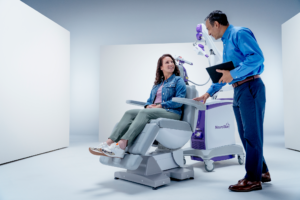
Transcranial magnetic stimulation (TMS) can produce meaningful symptom improvement in major depressive disorder, with controlled studies showing about 46% response and 31% remission, while large real-world data report higher rates. The TMS success rate varies by patient, protocol, and outcome measure.
A response means depression symptoms improve by a defined amount, while remission means symptoms fall to a much lower level. These terms are not the same as a guaranteed recovery.
Treatment results also depend on the TMS protocol, treatment course, and clinical history. Keep reading to understand what TMS success rates mean and what patients can realistically expect.
Key Takeaways
- TMS response rates are generally around 46% to 83%, depending on the study and measurement method.
- TMS remission rates range from about 28% to 62% in real-world data.
- Results usually develop over several weeks, and some patients maintain improvement for months to a year.
What Is The TMS Success Rate For Depression?
The TMS success rate is usually described through response and remission rates rather than one fixed percentage. That matters because a person can have a large drop in depression symptoms without reaching remission.
Response usually means that depressive symptoms have fallen by at least 50% on a clinical rating scale. Common scales include the Montgomery-Åsberg Depression Rating Scale, Hamilton Depression Rating Scale, and PHQ-9.
Remission has a stricter meaning. It means the score falls below a set clinical threshold, so few or no significant depressive symptoms remain. Remission does not mean depression can never return.
A 2020 real-world registry included 7,759 patients receiving TMS for depression. Depending on the rating method used, the study reported response rates from 58% to 83% and remission rates from 28% to 62%. The wide range came from differences in how treatment response was measured.
Another study published in 2016 looked at pooled clinical trial data. It found about 46% response and 31% remission among patients who completed treatment.
So why don’t the numbers match?
The studies used different patient groups, treatment methods, and rating scales. A real-world registry also does not measure treatment in exactly the same way as a controlled clinical trial.
| Outcome | What It Means | Published Rate |
| Response | At least 50% symptom reduction | 46% in 2016 |
| Remission | Symptoms reach a low clinical threshold | 31% in 2016 |
| Real-world response | Response in routine clinical care | 58% to 83% in 2020 |
| Real-world remission | Remission in routine clinical care | 28% to 62% in 2020 |
The numbers give useful context. They don’t predict what will happen to one specific patient, and outcomes should be considered within the broader context of TMS treatment for depression and the patient’s clinical history.
Why Do TMS Results Vary Between Patients?

TMS clinical outcomes can differ because depression itself differs from patient to patient. Treatment history, symptom severity, treatment schedule, and the stimulation protocol can all affect the result.
For example, some patients have had one depressive episode with limited medication exposure. Others have lived with depression for years and have tried several antidepressants without adequate relief. Those groups aren’t clinically identical.
The treatment method also matters. Repetitive TMS can use different stimulation frequencies and protocols. Some FDA-cleared systems use high-frequency stimulation, while others use intermittent theta burst stimulation or deep TMS technology for specific indications.
The treatment target can differ as well. Many depression protocols target the left dorsolateral prefrontal cortex, an area involved in mood regulation and related brain functions.
Several patient and treatment factors may affect outcomes:
- Severity of the current depressive episode
- Number of previous medication trials
- Duration of the current episode
- TMS treatment protocol
- Treatment attendance
- Concurrent medication
- Psychotherapy and other clinical care
- Other psychiatric or medical conditions
A 2016 pooled analysis found that patients with less severe depression and shorter current episodes had better response rates. These findings can help clinicians understand treatment patterns, but they can’t predict an individual outcome.
“The presence of two or more antidepressant treatment failures did not preclude a response to rTMS.” – PubMed
That distinction matters. A person with several previous medication failures can still respond to TMS.
What Does The TMS Results Timeline Look Like?
The TMS results timeline usually develops over a course of repeated treatments rather than after one appointment.
Many depression treatment plans involve sessions five days per week for several weeks. The exact schedule depends on the TMS system, protocol, clinical indication, and treatment plan.
During treatment, clinicians may track symptoms with a questionnaire such as the PHQ-9 or with a clinician-rated scale such as MADRS. Repeated scores give the treatment team a clearer picture than a single daily mood rating.
Some patients notice early changes in sleep, energy, concentration, or motivation. Others notice mood changes first. Some patients do not report clear improvement until later in treatment.
No single timeline applies to every patient, because TMS candidacy and treatment response can depend on the individual’s diagnosis, treatment history, and clinical circumstances.
A patient who has little improvement during the first part of treatment may still respond later. At the same time, a lack of progress over time may lead the clinical team to review the treatment plan.
Get the symptom scores recorded.
That makes progress easier to judge.
When Are TMS Results Usually Assessed?
Clinicians usually assess the overall response after an adequate course of treatment rather than deciding the outcome after a few sessions.
The clinical team may compare baseline scores with scores taken during and after treatment. If symptoms are improving but have not reached remission, the clinician may consider whether additional treatment is appropriate.
The decision can depend on symptom change, treatment tolerance, attendance, the original diagnosis, and previous treatment history.
TMS should also be viewed as part of depression care rather than an isolated procedure. Medication management, psychotherapy, sleep, medical conditions, and other factors may still need attention.
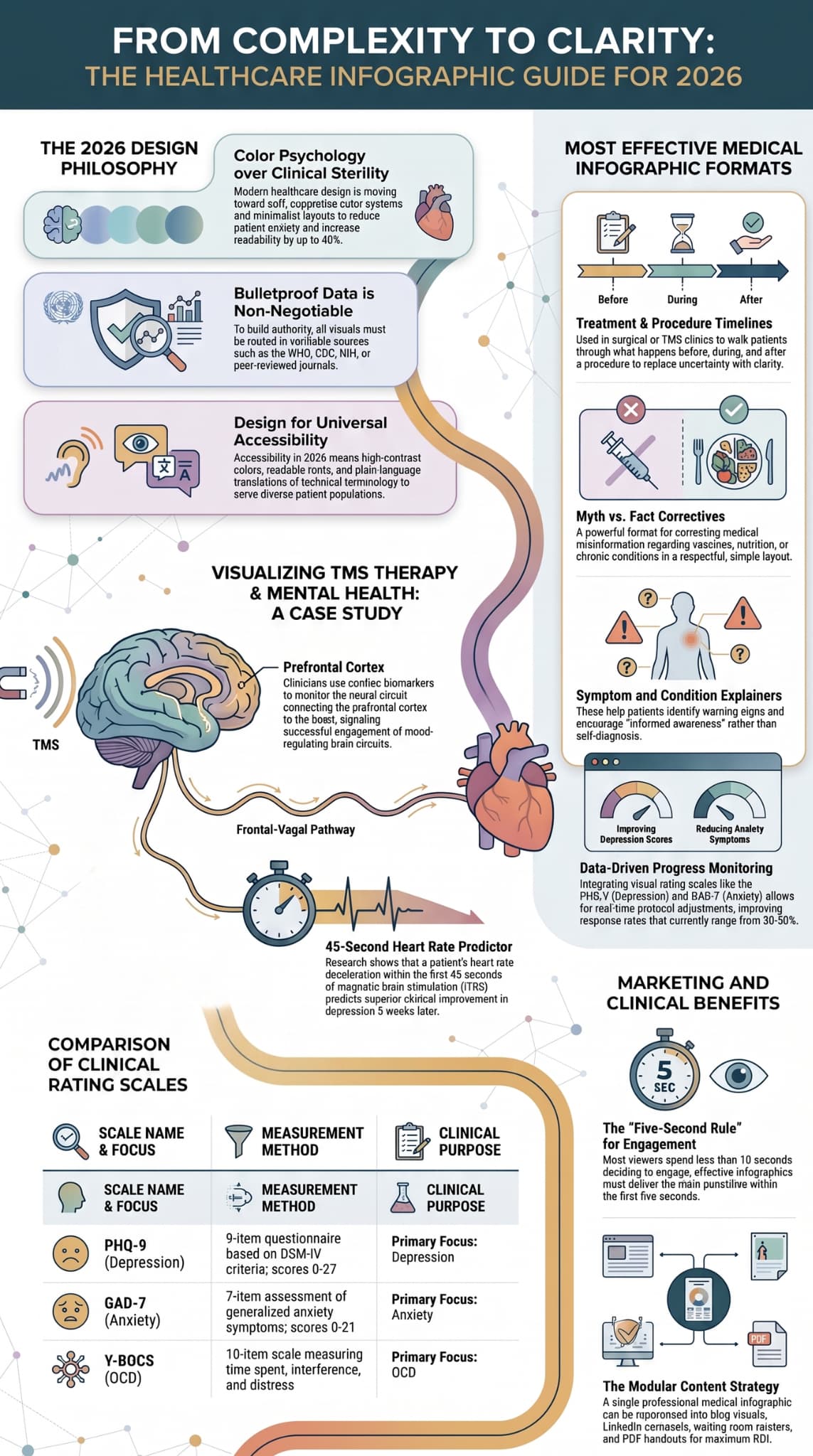
What Does the TMS Response Rate Mean?
The TMS response rate shows how many people experience a meaningful reduction in depression symptoms after treatment. Response is generally defined as at least a 50% reduction on a clinical rating scale, although the exact measure can vary between studies.
A 2016 pooled analysis reported a 46% response rate among patients who completed treatment. A larger 2020 real-world registry reported response rates ranging from 58% to 83%, depending on the rating method used. These differences show why you should consider the study design and measurement method when comparing TMS results.
The response rate does not mean that every patient has the same chance of improvement. Your treatment history, depression severity, current episode, treatment protocol, attendance, and other clinical factors can affect individual outcomes.
Response also differs from remission. You may experience a substantial reduction in symptoms without reaching the clinical threshold used to define remission. For this reason, your provider may track symptom scores throughout treatment rather than relying on one outcome measure.
Looking at the response rate alongside remission, symptom changes, and longer-term results gives you a clearer picture of what TMS may achieve. These figures provide useful clinical context, but they cannot predict your individual result.
What Is The TMS Remission Rate Compared With The Response Rate?

The TMS remission rate is usually lower than the response rate because remission requires a greater reduction in symptoms.
For example, a patient may have a 50% reduction in depressive symptoms and still have poor sleep, low motivation, or problems with concentration. That patient may meet the definition of response without meeting the definition of remission.
The 2016 pooled analysis reported about 46% response and 31% remission among treatment completers. This difference is clinically useful.
A response means the depression has improved substantially. Remission means symptoms have fallen to a low clinical level. A person can have meaningful improvement without reaching full remission.
That doesn’t make the treatment result unimportant.
Improvement in sleep, concentration, motivation, work performance, or daily function can matter even when some depressive symptoms remain.
How Can Patients Improve TMS Results?
Improving TMS results starts with appropriate patient selection and a treatment plan that can be followed consistently.
Regular attendance matters because TMS is delivered through repeated sessions. A missed appointment does not mean treatment will fail, but repeated interruptions can affect the planned treatment schedule.
The treatment team also monitors symptoms and side effects throughout care. If progress is limited, the clinician may review stimulation parameters, treatment adherence, the diagnosis, medication use, or other clinical factors.
Safety screening is also part of treatment. Certain implanted devices, conductive metal near the head, seizure risk, and other medical factors may affect whether TMS is appropriate.
TMS of Tennessee uses FDA-cleared TMS technology for indicated conditions. FDA clearance applies to specific devices and indications, so the term should not be used as a general claim that every TMS treatment is appropriate for every form of depression.
Patients should discuss medical history and current medications with the treating clinician before treatment begins, including when considering TMS therapy in Franklin, TN as part of a supervised treatment plan.
How Long Do TMS Results Last?

TMS benefits can continue after the initial treatment course, but the duration varies between patients. TMS should not be described as a permanent cure.
A 2018 systematic review and meta-analysis examined how long TMS benefits lasted among people who initially responded to treatment. The analysis found that 66.5% maintained their response at three months, 52.9% at six months, and 46.3% at 12 months.
These figures apply to groups of initial responders. They do not mean that every person receiving TMS will have the same duration of benefit.
“rTMS is a durable treatment for depression, with sustained responder rates of 50% up to 1 year after a successful induction course of treatment.” – PubMed
| Follow-up | Responders Maintaining Response |
| 3 months | 66.5% |
| 6 months | 52.9% |
| 12 months | 46.3% |
The decrease over time does not mean TMS has failed. Depression can recur after many effective treatments.
Some patients may receive additional TMS when symptoms return. Others may receive maintenance treatment based on their clinical history. The appropriate plan should be decided with the treating clinician.
Considering TMS for Depression?
For people considering TMS, a clinical consultation can help determine whether an FDA-cleared treatment is appropriate for their specific situation. TMS of Tennessee provides NeuroStar Advanced TMS Therapy for adults with major depression, using personalized brain mapping to develop an individualized treatment plan.
Explore TMS treatment to learn more and discuss whether this non-invasive treatment may be appropriate based on your depression and treatment history.
FAQs
Can TMS Work After Several Antidepressants Have Failed?
Yes, TMS can be used for depression that has not improved enough after antidepressant treatment. While prior medication trials may affect your overall TMS success rate, many patients still achieve meaningful symptom relief. Your treatment history should be reviewed during the clinical assessment to determine expected outcomes.
Does TMS Response Rate Mean Depression Is Cured?
No, a TMS response rate does not mean depression is cured. Response generally means depressive symptoms have decreased by at least 50%, while some symptoms may still remain.
How Soon Can TMS Response Begin?
A TMS response can develop during the treatment course, but the timing varies between patients. Some patients notice changes earlier, while others require more sessions before improvement becomes clear.
Can TMS Be Repeated If Depression Returns?
Yes, additional TMS may be considered for some patients who previously responded and later develop recurrent symptoms. The clinician should assess the current symptoms and previous treatment response before recommending another course.
Is TMS FDA-Approved Or FDA-Cleared?
Applicable TMS devices should be described as FDA-cleared, not FDA-approved. FDA clearance applies to specific devices and clinical indications, so a clinician still needs to determine whether treatment is appropriate for an individual patient.