












Depression Medications Not Working? NeuroStar® TMS Can Help When Pills Fail

FDA-cleared, non-drug treatment proven to relieve depression – covered by most insurance plans. 7.6+ Million Treatments Delivered.

“I tried countless medications. Nothing worked until NeuroStar”

-Kelly H., Nashville NeuroStar Patient

See If NeuroStar® TMS Is Right for You

Schedule your free consultation to review your treatment history and find out if TMS therapy is a fit for you — no cost, no obligation.

Most Major Insurance Plans Accepted


We’ll verify your benefits and handle pre-authorization for you.
image 47
image 46
image 48
image 49
image 50
image 51
image 52
image 53
image 54
image 55
image 56
image 47
image 46

Self-pay and financing options available upon request. We also accept medical financing options such as CareCredit and Advance Care Card.

See How NeuroStar® TMS Helped Real Patients Find Relief

image 18

Bart’s story:

From years of failed medications to lasting relief with NeuroStar® TMS

image 18

Mariah’s Story:

Regaining joy and connection after depression with NeuroStar® TMS treatment

image 18

Tod’s story:

Finding real relief after years of depression through NeuroStar® TMS

image 18

elsa’s Story:

Discovering NeuroStar® TMS & her husband’s journey

How Effective Is NeuroStar® TMS?

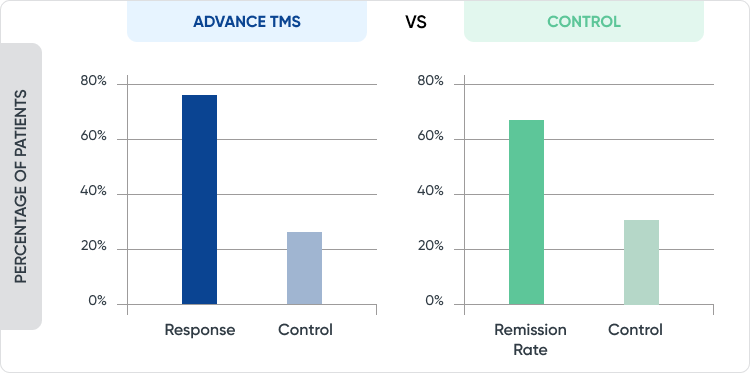
In NeuroStar’s real-world outcomes registry: ~83% of patients who completed treatment experienced measurable improvement and ~62–63% achieved remission in registry analyses (Sackeim et al., J Affective Disorders 2020). Individual results vary and may include patients on other therapies.

Many patients begin noticing small improvements within 2–4 weeks, with further gains through the full treatment course.

effective
work

How It Works:
Gently Restarting the Brain’s Pathways

Think of depression like a circuit that has been switched off. NeuroStar® TMS uses gentle magnetic pulses to help the mood-regulating areas of the brain switch back on, restoring balance, energy, and emotional stability over time.

Magnetic Stimulation

Gentle, focused pulses activate underactive areas of the brain tied to mood and emotion.

Neural Reactivation

Dormant pathways may begin to reconnect and communicate again. This is where change begins.

Comfort and Convenience

No sedation, no downtime. You can read, scroll your phone, or drive yourself home after each session.

Treatment Schedule

Short in-office sessions lasting about 19 to 37 minutes, five days a week for four to six weeks.

What Treatment Really Feels Like

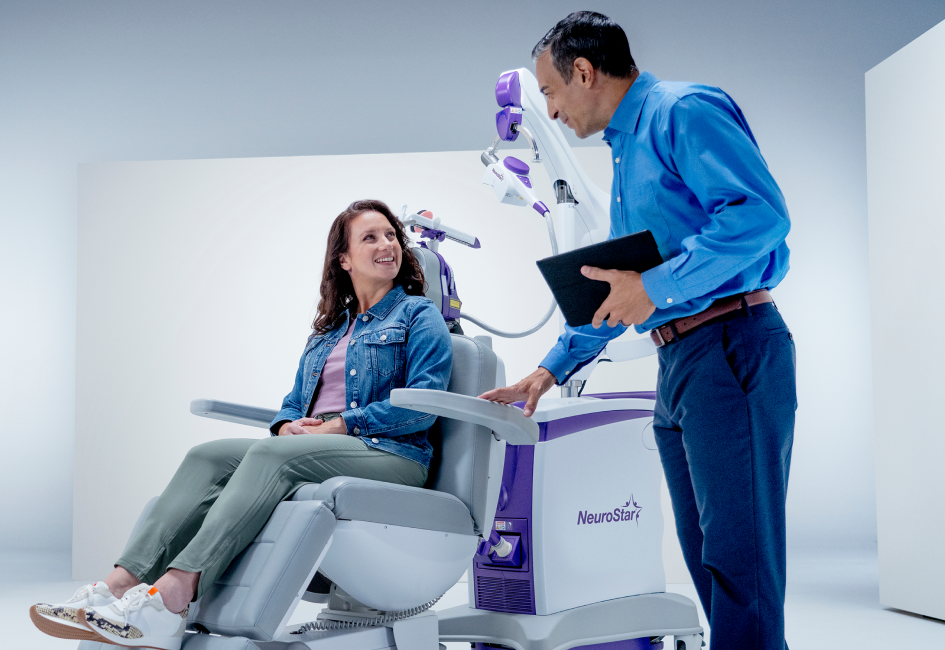
Forget hospital gowns and cold fluorescent lights. TMS feels more like sitting in a comfy chair while someone lightly taps on your scalp.

No needles. No drowsiness. No fog.

Most patients scroll through their phones, chat, or even close their eyes while the session runs.

By week 3 or 4, many patients start noticing small but powerful shifts: waking up with more energy, laughing at something they hadn’t found funny in months, feeling lighter during everyday tasks.

When Medications Stop Working, There’s Still Hope

Depression isn’t one-size-fits-all. Your brain’s pathways may simply not respond to medication the way doctors expect. You may have tried two, three, or even five different antidepressants, only to find yourself back at the same starting line. That doesn’t mean you can’t get better. It means you may need a different approach.

pills
fumble line

Find the TMS Treatment Plan That Fits Your Life

Each option uses the same proven NeuroStar® technology. We’ll help you choose the schedule that’s most comfortable and effective for you:

What It Entails

Time Commitment

Pros You’ll Notice

Standard NeuroStar® TMS

Daily sessions (Monday–Friday), about 19–37 minutes each, for ~4–6 weeks.

Moderate (longer timeline)

Slowly building relief, sustainable change.

Accelerated NeuroStar® TMS

Multiple shorter sessions per day over fewer days (if qualified).

Higher intensity, shorter calendar time

Faster initial relief, more concentrated effort.

Advanced NeuroStar® TMS

Targets deeper brain regions, possibly more effective for certain people.

Comparable session count, maybe slightly different sensations.

May offer stronger results in fewer sessions for some.

What to Expect During TMS Treatment

From your first visit to your final session, here’s exactly what to expect during treatment:

Initial Assessment

We’ll review your medical history, previous treatments, current symptoms, and your goals. We want to understand you, not just your diagnosis.

Mapping & Setup

We place the magnetic coil precisely on your head in the region tied to mood regulation. Technicians make sure you’re comfortable.

Sessions Begin

  • A clicking or tapping is normal.
  • You’ll be awake, relaxed, maybe watching something or listening to music.
  • Sessions last 19–37 minutes (depending on protocol).

Tracking Progress

We check in regularly, may send mood questionnaires, how daily life feels, side effects. If something isn’t working, we adjust.

After Each Session

You can go about your day. Many drive themselves home. No downtime.

Over the Whole Course

It’s natural to have ups & downs, some days feel better, others less so. But most people notice real shifts by week 3–4, growing stronger toward the end.

Real Patients. Real Relief.

Rated 5★ by Patients Across Franklin & Middle Tennessee

right 1

Is TMS the Right Next Step for You?

If you’ve tried antidepressants without lasting relief, or if side effects have made daily life harder, TMS may be the next step toward feeling like yourself again.

FDA clearance applies to patients age 15 and older. Our team carefully evaluates each case individually.

Insurance & Affordability:
We Handle the Hassle

Many major insurers and Medicare have coverage policies for NeuroStar TMS. We’ll verify benefits and handle pre-authorization for you.

Our team takes care of benefit checks, pre-authorizations, and paperwork, so you don’t have to. Payment plans are available for those without coverage.

insurance
financial

Financial Assistance for TMS Care

If cost is standing between you and treatment, we’ll work with you to find a solution.

Franklin’s Trusted TMS Clinic

You don’t have to travel far for expert, FDA-cleared TMS care. Our Franklin clinic proudly serves patients from Brentwood, Nashville, and surrounding communities offering personalized treatment in a calm, comfortable setting close to home.

Ready to See if TMS Is Right for You?

Book your free, no-obligation consultation. It only takes 2 minutes. Our team will reach out to confirm your appointment and answer any questions.

Or call (615) 551-0894 to speak with our care team.

free con

A Different Way to Heal: NeuroStar® TMS

NeuroStar® Advanced TMS Therapy is a non-drug treatment that directly targets the areas of your brain involved in mood. Using technology similar to an MRI, TMS delivers focused magnetic pulses that stimulate underactive mood regions.

FDA-cleared. Clinically proven. Medication-free.

heal

Frequently Ask Questions

What is TMS?

TMS (Transcranial Magnetic Stimulation) is a non-invasive therapy using magnetic pulses to activate areas of the brain involved in mood. It’s used when antidepressants or talk therapy haven’t brought enough relief.

Most people feel a tapping or tingling on the scalp during treatment. Some report mild discomfort or a headache early on. These effects usually fade after the first few sessions. No anesthesia needed, no memory or sedation effects.

Many patients begin noticing small improvements in mood, energy, or sleep by weeks 2–3. More substantial changes generally emerge around week 4 or later. Everyone’s journey is different.

Yes, for most people. We screen you carefully: medical history, metal implants, seizure history, etc. Side effects are usually mild and temporary. If there are risk factors, we discuss them openly and adjust plans accordingly.

Most major insurance providers do cover TMS for treatment-resistant depression. Our team will help you check your benefits, submit authorizations, and explore payment options if insurance doesn’t fully cover the cost.