When antidepressants don’t work for major depression, FDA-cleared transcranial magnetic stimulation is an option. You have two main paths: standard TMS, which is the traditional approach, and accelerated TMS, a more intensive schedule packed into fewer days.
Which one is right depends on how severe your symptoms are, what your calendar looks like, and what treatments you’ve already tried. Recent studies are making accelerated TMS, which can cut treatment time from six weeks to less than ten days, a bigger part of the conversation for tough cases.
But it’s not a simple choice. You and your doctor have to weigh the safety data, the research behind it, what your insurance will pay for, and whether you can handle daily sessions. Let’s look at what actually changes between the two methods and why it matters for your care.
Key Takeaways
- Standard TMS uses one daily session over 4 to 6 weeks, while accelerated TMS delivers multiple sessions per day across a compressed schedule.
- Accelerated iTBS protocols may produce faster symptom relief, but long‑term remission data are more extensive for standard rTMS; accelerated evidence is promising but still evolving.
- The right approach depends on insurance coverage, symptom urgency, treatment-resistant depression severity, work flexibility, and medical candidacy.
Quick Answers Before You Choose a TMS Protocol
When it comes to transcranial magnetic stimulation (TMS) for depression, the treatment itself is the same, a magnetic coil stimulates your brain. The big difference is in the schedule. That’s why knowing about the Types of TMS Therapy is key when you look at standard versus accelerated protocols.
What is accelerated TMS?
Think of this as the express option. You don’t have one session per day. Instead, you could have anywhere from four to eight sessions in a single day. The entire treatment wraps up in just five to ten days. A common approach here is called iTBS, which uses short, three-minute bursts of stimulation.
How TMS targets depression
In our clinic, we treat Major Depressive Disorder by focusing on a specific brain area: the left dorsolateral prefrontal cortex. In depression, this region is often underactive, which throws off the brain circuits that control mood and emotional stability.
We place the magnetic coil precisely over this spot. The magnetic fields create a small electrical current that passes through your skull. This current activates the sluggish neurons, helping them fire at a normal, healthy rate again. This isn’t just a gentle nudge for your brain. It’s a targeted treatment meant to fix the wiring in your brain’s mood network.
Research indicates that for patients who haven’t improved with medication, between 50% and 60% see positive results from standard TMS.
A Side-by-Side Look
| Feature | Standard TMS | Accelerated TMS |
| Total Timeline | 4 to 6 weeks | 5 to 10 days |
| Sessions Per Day | 1 | 4 to 8 |
| Typical Protocol | 10 Hz rTMS | iTBS |
| When Improvement Starts | Usually around weeks 3 or 4 | Can be within a few days |
| Daily Time Commitment | 20-40 minutes in clinic | Several hours in clinic |
We don’t pick a protocol for you. We look at your life. How bad are your symptoms? What have you already tried? What’s your schedule like? The main question is time: can you come in for weeks, or do you need help in days?
Both treatments are outpatient. No surgery. No anesthesia. You’re awake. They use the same FDA machine and work on the same science.
What Is Standard TMS and Why Is It Still the Clinical Baseline?
Think of standard 10 Hz TMS as the clinical gold standard. It has been the reliable baseline for over two decades for one simple reason: we have the most proof that it keeps people well over time. While newer, faster schedules sound exciting, the traditional approach gives us a mountain of long-term data.
Because treatment is spread out over six weeks, it allows our clinical team to watch how your brain changes safely and gradually. We aren’t guessing. We use regular symptom check-ins to watch your progress step-by-step, making sure your brain gets exactly what it needs to heal without being overwhelmed
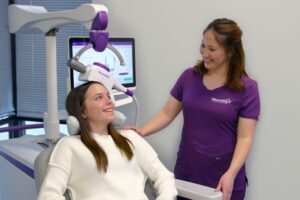
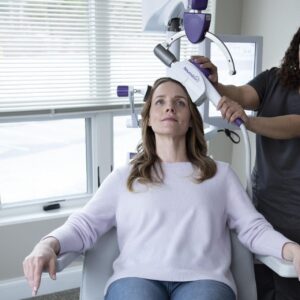
A session itself is simple. You sit in a chair. The technician positions the magnetic coil against your head. The machine pulses for about 20 to 40 minutes, and then you get up and leave. No sedation, no downtime. Crucially, it doesn’t cause the cognitive blunting or memory issues that can come with electroconvulsive therapy.
This standard method is what insurance prefers. Medicare, Tricare, and most private insurers have policies for it. They typically require documentation showing a patient has tried and failed to get better on at least two or three different antidepressant medications before they will approve rTMS.
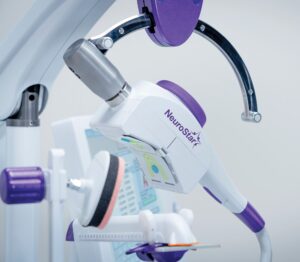
In practice, clinics use FDA-cleared machines like NeuroStar. These systems are approved for major depressive disorder, and also for obsessive-compulsive disorder and anxious depression when the patient’s specific symptoms match the treatment criteria.
So why does this older protocol remain the baseline? A few practical reasons:
- The long-term data is solid. We know it helps a significant portion of patients achieve remission.
- The schedule is fixed and predictable for both the clinic and the patient.
- Progress is measured with standard depression surveys, like the PHQ-9.
- Its safety record is extensive and well-published in medical journals.
The main drawback is the time commitment, showing up almost daily for over a month is a lot. But its reliability and insurance coverage are why, for now, standard TMS is the reference point. When psychiatrists think about neuromodulation, this is the treatment they compare everything else to.
How Does Accelerated TMS Compress Weeks of Treatment Into Days?

Accelerated TMS does it by changing the schedule. Instead of one session a day for a month or more, you get several sessions each day for a week or two. It uses faster types of magnetic stimulation, like iTBS, which only takes a few minutes per session, similar to protocols used in Accelerated TMS Therapy in Brentwood and Franklin for patients needing a compressed treatment timeline.
These short sessions are repeated 4 to 8 times in a single day, with breaks in between. A key example is the Stanford SAINT method. It uses a special brain scan to aim the magnetic pulses very precisely at a part of the brain called the left DLPFC. This approach has helped some people with severe depression feel better faster.
Here’s what a treatment day looks like:
- First, they map your brain to find the right spot and set the machine’s strength.
- Then, you go through several quick iTBS sessions. Each one is only 3 to 5 minutes.
- You must take a break of at least 20 minutes between each session.
- The clinic staff checks how you’re feeling and watches for side effects like headaches or tiredness.
All this activity is hard on the equipment, too. The main trade-off is intensity. You finish treatment much quicker, but the days themselves are long and demanding. Deciding if it’s right for you means balancing the desire for fast results with the ability to handle a more strenuous routine.
What’s the Real Difference Between Standard and Accelerelerated TMS?
Choosing a treatment isn’t just about science. It’s about your life. The big differences you’ll notice are in your schedule, how quickly you might feel a change, your insurance bill, how tired you are, and how much your normal week gets disrupted.
For someone with depression that hasn’t responded to other treatments, speed is important. But in reality, your job, how much time off you have, getting to the clinic, and what your insurance company says are what usually make the final decision.
To cut through the medical jargon, the decision between these two tracks comes down to balancing clinical speed against proven durability. Instead of looking at fragmented scheduling charts, patients should weigh the exact logistical and biological trade-offs directly:
| Clinical Feature | Standard 10 Hz rTMS (The Baseline) | Accelerated iTBS / SAINT (The Intensive Track) |
| Daily Time In Clinic | 20 to 40 minutes (Single session) | 4 to 8 hours (Multiple sessions + 50-min mandatory neuro-rest intervals) |
| Total Course Duration | 4 to 6 weeks (30 to 36 sessions total) | 5 to 10 days (Squeezed into a highly compressed window) |
| Onset of Relief | Gradual; typically observed around weeks 3 or 4 | Rapid; clinical shifts often register within the first 3 to 5 days |
| Insurance Coverage | Universally covered by Medicare, Tricare, and commercial payers after 2-3 medication failures | Frequently denied or requires specialized single-case agreements; often out-of-pocket |
| Systemic Fatigue | Minimal; patients routinely drive themselves back to work immediately | High; cumulative daily sessions trigger a distinct ‘TMS hangover’ or mental exhaustion |
| Long-Term Data | Decades of robust, published longitudinal data tracking stable remission | Promising rapid-response data, but long-term retention often requires proactive maintenance protocols |
The side effects are mostly the same: headache, scalp tenderness, feeling tired for a bit, and some trouble focusing. Because you get more stimulation in one day with accelerated TMS, these side effects can feel stronger.
No version of TMS guarantees you’ll get completely better. Both need a plan made just for you, and a clear talk about what could go wrong and what could go right before you start.
Is Accelerated TMS More Effective or Just Faster?

For doctors, the real question isn’t just about speed. It’s about whether accelerated TMS works better over time. Yes, it can relieve symptoms faster. But for long-term remission, the standard TMS protocol has more evidence and is more widely trusted.
Research from ScienceDirect shows
“Both protocols produced significant and comparable improvements in depressive symptoms, anxiety, and quality-of-life… Patients in the ACC-iTBS arm reported a shorter median time to CUDOS response (11 vs. 16 days, p = 0.0377).” – Aron Tendler et al.
In psychiatric circles, this is a big debate. Looking at the research, some accelerated treatments show promising remission rates, over 60% in some studies of tough-to-treat patients. But you have to read the fine print. Not all “36-session” protocols are the same. The amount of brain stimulation, and how it’s delivered, changes everything.
What actually makes a difference? A few key things:
- How many magnetic pulses are given per session.
- How long the brain gets to rest between sessions.
- Exactly where on the head the coil is placed.
- Whether it’s theta burst or standard 10 Hz stimulation.
- If they use an MRI to guide the coil placement.
- The total dose of stimulation given each day.
Accelerated theta bursts cram a lot of therapy into a short time. The theory is that multiple sessions in one day might strengthen the brain’s response. The worry is that it might be too much, too fast for some people, and could even set them back.
Studies that use MRI guidance to place the coil get better results than those that just use a tape measure on the scalp. When you’re treating someone over days instead of weeks, there’s no time to correct a bad placement. Precision isn’t just ideal; it’s mandatory.
We’re still figuring out how long the benefits last. In practice, some patients feel better quickly with the accelerated schedule, but then they seem to need a “booster” session or another full course of treatment sooner than patients who did the slower, traditional regimen.
Here’s the bottom line for clinicians:
- Accelerated TMS can speed up initial relief.
- Standard TMS has more proof behind it for lasting results.
- Faster treatment doesn’t always mean longer-lasting recovery.
- A well-designed protocol beats a fast one every time.
The goal is to fit the treatment to the patient, not the other way around. The best programs focus on what the evidence says works, not just on what sounds quick. That’s how you get results that stick.
Why Do Some Accelerated TMS Programs Fail in Real Life?
The plan is good: more treatments, less time. But in real life, these programs often don’t work as expected. They usually fail because of how they’re done, not the idea itself.
As noted by PubMed
“The literature to date suggests that aTMS is safe and well-tolerated across conditions. Taken together, these early studies suggest potential effectiveness even in highly treatment refractory conditions with the added potential to reduce patient burden while also expediting response time.” –Kevin A Caulfield et al.
A big issue is moving too fast. Some schedules try to do too many sessions in one day. Studies show that doing more than four to six sessions daily can cause problems. Patients get fatigued. Their brains can become overstimulated. The break between sessions matters a lot. Good programs leave at least twenty minutes between treatments. This gives the brain a chance to reset.
In clinical reality, when an accelerated TMS program fails, it is rarely a failure of the technology; it is almost always a failure of execution. In a compressed 5-day schedule, there is zero margin for error. If a technician miscalculates the patient’s motor threshold or misplaces the coil by even five millimeters on Monday morning, that error is multiplied 40 times over by Friday afternoon.
Furthermore, many commercial clinics compromise the data-backed inter-session interval; if you do not give the brain a strict, mandatory 50-minute rest window between pulses, the neuroplastic response saturates, rendering subsequent sessions useless. Programs yield poor results when they operate like a high-volume assembly line rather than a tightly controlled neurological ICU.
What Side Effects and Burnout Complaints Do Patients Report Most Often?

Patients getting accelerated TMS talk about a few things a lot. The main ones are headaches, a sore scalp, and just feeling wiped out.
Patients commonly report fatigue, headaches, and mental exhaustion during accelerated protocols.
Here’s what comes up most often:
- Headaches that kick in after a few rounds of stimulation.
- Tenderness or aching right where the coil was placed.
- Trouble focusing for a short while after a session.
- A heavy fatigue, like a “TMS hangover.”
- Feeling emotionally spent, especially on days with several appointments.
- Worry that the depression will come back once treatment ends.
Then there’s the life disruption. Accelerated TMS might mean burning through vacation days, needing rides to the clinic several times a week, or putting normal responsibilities on hold. The standard approach spreads that hassle over a month or two, which some people find less overwhelming.
But maybe the biggest complaint isn’t physical. It’s the fear of relapse. When you feel better quickly, you hope it’ll last. If old symptoms return later, the disappointment hits hard. That’s why managing expectations from the beginning is so important.
These side effects are usually manageable. Still, clear, honest talk before starting treatment is key. It helps patients get ready for the physical feelings, the schedule demands, and the emotional ups and downs.
Who Is a Better Candidate for Standard TMS?
Standard TMS is often the right choice for patients who depend on insurance, want a gentler daily routine, and need a steady, long-term outpatient plan, particularly for individuals pursuing structured TMS Therapy for depression after multiple medication attempts have failed.
For people with Major Depressive Disorder or depression that hasn’t responded to other treatments, standard TMS balances strong evidence with a manageable schedule. Insurance usually requires you to have tried several antidepressants without success first.
In our practice, we don’t treat patients based on a generic brochure; we look at the specific neurobiology sitting in front of us. When evaluating a candidate for a standard protocol like NeuroStar, our clinical team runs a comprehensive baseline screening.
This isn’t just a checklist to review your complete psychiatric history, map your specific motor threshold to calibrate the machine’s dosage, and rule out structural contraindications like metallic implants or seizure risks. A successful outcome depends entirely on matching the protocol to the patient’s real-world resilience, not forcing a patient into a fixed scheduling slot.
Standard TMS fits well for:
- Professionals who need short, predictable appointments.
- Patients who are easily overstimulated or fatigued.
- Those who require insurance coverage to afford treatment.
- Individuals who want treatments backed by long-term remission data.
- Adults seeking consistent outpatient depression care.
- Patients combining TMS with ongoing therapy or medication.
The gradual protocol lets us watch symptom changes closely. Weekly PHQ-9 assessments help us catch issues early and adjust treatment as needed.
This approach isn’t typically for mild depression that improves with medication alone. NeuroStar’s FDA-approved protocols target those who haven’t found sufficient relief from traditional antidepressants.
Who Might Benefit From Accelerated TMS Instead?

Certain iTBS (Intensive Transcranial Magnetic Stimulation) protocols can be completed in roughly five days. This makes them a practical option for individuals with severe symptoms or very limited time. A crucial point is medical stability, the patient must be medically fit to tolerate several daily sessions.
Potential candidates for accelerated TMS typically include:
- Individuals in a severe depressive episode
- People under pressure from imminent work or academic deadlines
- Patients who travel a significant distance to the clinic
- Adults requiring rapid control of their symptoms
- Those who experienced limited benefit from a conventional TMS schedule
Accelerated TMS may fit patients facing urgent functional decline, academic disruption, or significant travel barriers.
It is vital to remember that thorough screening is always required. FDA-cleared TMS systems, including NeuroStar, are not safe for use with certain implants. This includes conductive metal implants in the head, cochlear implants, and active deep brain stimulators.
While rapid symptom relief is a clear advantage, accelerated TMS does not eliminate the need for close clinical monitoring, realistic expectation setting, and a treatment plan adapted to the specific patient.
What Should You Ask a Clinic Before Starting TMS?
Starting TMS therapy is a big step. To make sure you’re in good hands, you need to ask the clinic some direct questions. The usual treatment is 30 to 36 sessions, but that’s just the number. The real focus should be on their approach: how they aim the treatment, how they measure its strength, and how they check if it’s working for you.
For example, at a clinic like TMS of Tennessee, they don’t just start. They first do a personalized brain map to find the right spot. They run a full safety check. Then they evaluate whether NeuroStar Advanced Therapy is the right fit for your specific situation.
Don’t be shy about asking these questions:
- Do you use guided targeting systems, like neuronavigation, to aim the magnet?
- Exactly which FDA-approved TMS machine do you use here?
- How do you track my depression scores? Do you use forms like the PHQ-9?
- How do you count the magnetic pulses and confirm the dose I get each time?
- What are your clinic’s actual success rates? How many patients get significantly better or achieve remission?
- What happens if I start feeling worse during the treatment?
- How do you watch for side effects, and what do you do if I have them?
- Which insurance plans do you take for regular TMS? What about faster, accelerated TMS?
- Is there a plan to slowly reduce treatments after I finish the main course?
- How do you decide if someone is eligible for the accelerated schedule?
It’s also critical to talk about safety from the start. If you have a history of seizures, certain metal in your head, or other brain-related conditions, the clinic needs to know this upfront to assess your risk.
A trustworthy TMS clinic won’t rely on fancy brochures. Their foundation should be clear communication, careful tracking of your symptoms, and methods based on solid science. Getting straight answers to these points gives you the clarity you need to choose.
Finding the Right TMS Schedule for Real Life
Trying to choose between standard and accelerated TMS can feel stressful when you’re already dealing with depression. The faster option may sound appealing, but the daily schedule can be exhausting, especially if you’re balancing work or family demands. Insurance coverage also plays a big role, and long-term results matter just as much as getting relief quickly.
At TMS of Tennessee, the focus is on helping you find a treatment plan that actually fits your situation, not pushing a one-size-fits-all approach. Their NeuroStar Advanced TMS Therapy uses non-invasive magnetic pulses with personalized brain mapping, giving you a clear next step if medications haven’t worked well for you.
FAQ
Can one-day TMS provide the same results as longer treatment schedules?
One-day TMS is a form of accelerated neuromodulation therapy that delivers many sessions within a single day. Some patients experience rapid symptom improvement, but long-term TMS remission rates still need more research compared to traditional TMS therapy.
What happens during a TMS mapping session?
A TMS mapping session helps clinicians locate the correct treatment area for dorsolateral prefrontal cortex stimulation. The process also measures the stimulation intensity needed for safe and effective brain stimulation therapy.
Is accelerated psychiatric care harder to tolerate physically?
Accelerated psychiatric care often involves multiple TMS sessions per day, which can increase fatigue and scalp discomfort. Some patients report stronger TMS side effects because accelerated brain stimulation delivers treatment over a compressed schedule.
Can TMS treatment planning change during therapy?
Doctors may adjust TMS treatment planning based on symptom changes, side effects, and treatment response. Personalized TMS therapy sometimes includes schedule adjustments, maintenance sessions, or changes to the TMS treatment frequency.
How does high-frequency magnetic stimulation affect depression symptoms?
High-frequency magnetic stimulation targets brain regions linked to mood regulation therapy and neurostimulation for depression. This type of noninvasive brain stimulation may improve communication between underactive brain networks involved in major depressive disorder.
References:
- https://www.sciencedirect.com/science/article/pii/S1935861X26000252
- https://pubmed.ncbi.nlm.nih.gov/35816982/